Різниця між wet vs dry cylinder liner designs affects much more than how a liner looks. It changes how the liner is supported in the block, how it interacts with coolant, whether sealing rings are required, what the workshop must inspect before installation, and which dimensions matter when a replacement is ordered.
For heavy truck engine repairs, the safest approach is not to label a liner “wet” or “dry” from appearance alone. The engine design, service documentation, old liner, block geometry, sealing arrangement, and required dimensions should all agree. This guide explains the practical differences in wet vs dry cylinder liner construction so workshops and parts buyers can plan replacement work more accurately.
What Is a Wet Cylinder Liner
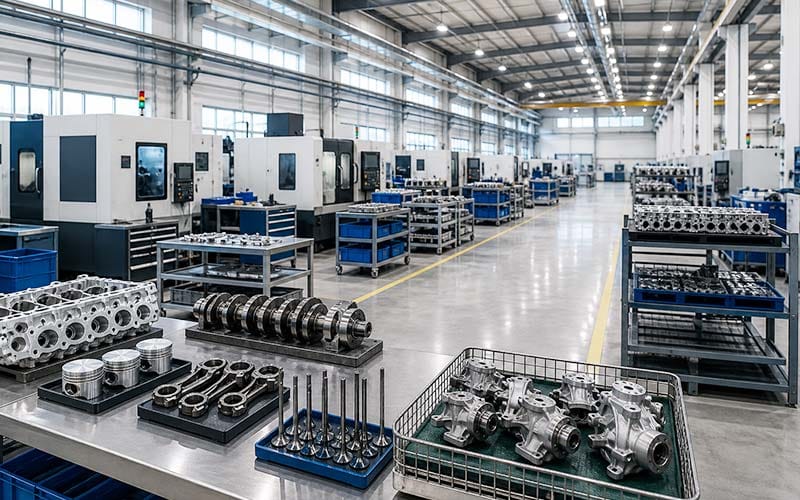
A wet cylinder liner is installed so engine coolant flows directly around the outside wall of the liner. Because the liner forms part of the coolant boundary, sealing rings are typically used to prevent coolant from leaking into the crankcase or other areas.
В а wet vs dry cylinder liner comparison, this direct coolant contact is the defining feature of the wet design. It also means liner sealing, flange seating, protrusion, and lower-block condition become especially important during installation.
Motorservice describes wet liners as common in utility vehicles and larger industrial engines and notes that coolant flows directly around the liner. Its technical material also highlights the use of sealing rings and the need to inspect the block seating surfaces carefully before installation. citeturn719940search0turn719940search18
What Is a Dry Cylinder Liner
A dry cylinder liner does not have coolant flowing directly around its outer wall. Instead, it fits into the cylinder bore of the engine block, and the block material separates the liner from the coolant passages.
В wet vs dry cylinder liner design, dry liners are generally thinner and depend strongly on the accuracy and condition of the block bore that supports them. Some are press-fit; others are slip-fit, depending on the engine design.
Motorservice notes that dry liners are inserted directly into the engine cylinder and can be either press-fit or slip-fit designs. Because the surrounding block supports the liner, bore geometry and surface condition are critical. citeturn719940search0turn719940search2
Wet vs Dry Cylinder Liner at a Glance
| Feature | Wet Cylinder Liner | Dry Cylinder Liner |
|---|---|---|
| Coolant contact | Coolant contacts liner outer wall directly | Coolant is separated by engine block material |
| Sealing rings | Usually required | Normally not used around liner outer wall in the same way |
| Wall thickness | Generally thicker | Generally thinner |
| Block support | Supported at designed seating and guide areas | Closely supported by block bore |
| Common installation focus | Flange seat, protrusion, seals, coolant leakage | Bore geometry, press/slip fit, distortion |
| Replacement planning | Requires correct liner plus sealing system | Requires correct liner plus correct block bore condition |
Why the Cooling Relationship Changes the Repair
The direct-coolant design is the biggest practical difference in wet vs dry cylinder liner repairs. A wet liner is part of the cooling-system boundary, so corrosion, cavitation, seal condition, and lower-block sealing surfaces can all affect reliability.
A dry liner does not directly seal coolant at its outer wall, but it depends heavily on full and correct support from the surrounding block. If the bore is distorted, corroded, or incorrectly machined, the thin liner can deform after installation.
That means both designs require careful block inspection, but the failure risks differ.
Wet Liners Require a Reliable Sealing System
При порівнянні wet vs dry cylinder liner, sealing rings are a major purchasing and installation difference. Wet liners normally require one or more seals at the lower portion of the liner or other designated sealing points.
The correct seal material, diameter, location, and lubrication method should come from the applicable engine documentation. Incorrect sealing rings can distort the liner or allow coolant leakage.
MAHLE’s technical material warns that incorrect gasket diameter or material around wet liners can squeeze and distort the cylinder, potentially leading to piston seizure. It also recommends pressure-testing the cooling system after installation to identify leakage before operation. citeturn719940search20
Dry Liners Depend on the Condition of the Block Bore
In a dry-liner design, the liner is supported directly by the block bore. That makes bore roundness, surface condition, corrosion, and dimensional accuracy especially important in a wet vs dry cylinder liner comparison.
For press-fit dry liners, the interference relationship can influence the final internal liner geometry. If the supporting bore is distorted, the installed liner may also become distorted. Some press-fit liners require final boring or honing after installation.
Motorservice specifically notes that dry liners can become distorted when the supporting block bore is uneven or corroded, and that press-fit liners may require machining after installation. citeturn719940search2
Do Not Identify a Liner Type by Wall Thickness Alone
Wet liners are often thicker and dry liners often thinner, but wall thickness should not be used as the only identification method. For wet vs dry cylinder liner selection, the block design and sealing arrangement are stronger evidence.
Look at whether coolant contacts the liner directly, whether lower sealing rings are used, how the liner seats in the block, and how the service documentation describes installation.
The old liner can also provide useful evidence. Seal grooves, flange geometry, outer-wall corrosion patterns, and the shape of the block support can help identify the design.
Flange and Protrusion Matter More on Wet Liner Installations
Wet liners often use a flange that locates the liner at the top of the block. In wet vs dry cylinder liner installation, correct flange seating and liner protrusion are therefore critical.
The block’s liner seat must be clean, flat, and undamaged. Dirt, corrosion, or an uneven support surface can cause incorrect protrusion, distortion, or flange damage.
Motorservice technical guidance specifically identifies liner flange-seat condition and correct protrusion as important for wet-liner installation. citeturn719940search3turn719940search7
Cavitation Is a Major Wet Liner Concern
Cavitation is strongly associated with wet liners because their outer wall is directly exposed to coolant. High-frequency liner vibration can create vapor bubbles that collapse against the liner surface and gradually erode the material.
В а wet vs dry cylinder liner comparison, cavitation should therefore be considered when the outside wall of a wet liner shows pitting or cavities.
Technical failure-analysis guidance identifies wet-liner cavitation as erosion caused by liner vibration and repeated collapse of vapor bubbles in the coolant. Cooling-system condition and correct coolant protection can influence the risk. citeturn719940search21turn719940search3
Dry Liners Have Their Own Distortion Risks
Dry liners avoid direct-coolant cavitation on their outside wall, but they can suffer from distortion when the block bore does not support them evenly.
This is an important point in wet vs dry cylinder liner replacement planning. If a dry liner is pressed into a bore that is out-of-round, damaged, corroded, or incorrectly machined, the final liner bore may no longer remain cylindrical.
Distortion can then affect piston-ring sealing, oil consumption, blow-by, and piston contact. The supporting bore must therefore be inspected before the liner is fitted. citeturn719940search2
Measure the Old Liner Before Ordering a Replacement
Whether the engine uses wet or dry liners, a replacement should be matched from the actual liner and engine data. A wet vs dry cylinder liner RFQ may require the inside diameter, outside or register diameter, flange diameter, flange height, total length, and other application-specific dimensions.
MAHLE’s cylinder-liner technical guide lists several standard liner dimensions such as register diameter, flange diameter, flange height, total height, and other features used to distinguish liner styles. citeturn719940search19
Do not measure randomly. Record the exact feature and measuring points so the supplier knows what each number represents.
Match the Liner With the Piston
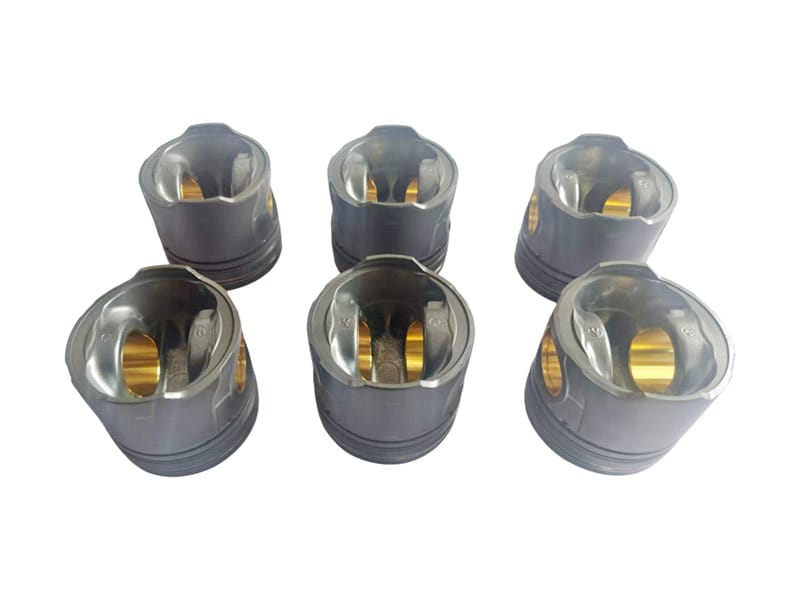
A liner should never be selected independently from the piston. In wet vs dry cylinder liner replacement planning, the liner type is only one part of the matching process.
The piston design, bore relationship, repair size, ring configuration, and piston pin still need to match the engine. The previous guide on відповідність поршня та вкладиша explains how these parts should be reviewed as a system.
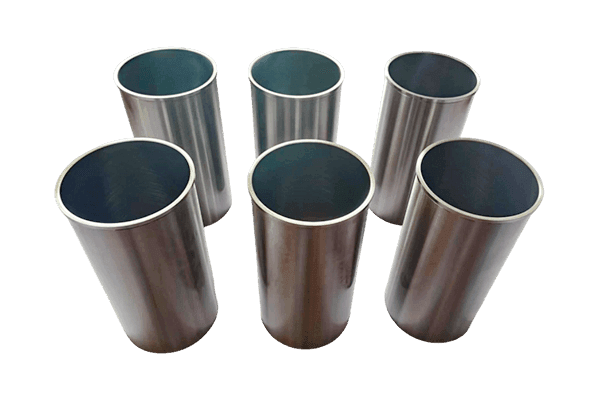
Течія сторінка вкладиша циліндра двигуна can be used to identify the product category, but the exact wet/dry classification and fitment must be confirmed for the actual engine.
Do Not Assume the Website Liner Is Wet or Dry Without Engine Evidence
The current product page does not publish enough information to classify every offered liner automatically as wet or dry. Therefore, a wet vs dry cylinder liner article should not convert a general product photo into a technical specification.
For a real order, the buyer should send the complete engine code, old liner reference or markings, liner dimensions, seal information, and photos of the old liner and block interface.
This keeps the product discussion accurate and avoids creating a fitment claim that the public page does not support.
Wet Liner Replacement Requires Seal and Block Seat Checks
When the engine uses a wet liner, the wet vs dry cylinder liner inspection should focus on the lower sealing grooves, block seating areas, flange support, coolant-side corrosion, and liner protrusion.
Install the correct sealing rings in the correct locations and use the specified installation lubricant where required. After fitting, the cylinder bore should be checked for distortion in areas influenced by the sealing rings.
If the block seat or lower guide area is damaged, replacing the liner alone may not correct the problem.
Dry Liner Replacement Requires Bore Preparation Checks
For dry liners, the wet vs dry cylinder liner workflow places more emphasis on the supporting cylinder bore. The bore should be checked for dimensional accuracy, corrosion, surface damage, and distortion.
Press-fit and slip-fit dry liners also need different installation planning. A press-fit liner can change shape during installation and may require finish machining afterward, while a slip-fit liner may arrive closer to final bore condition depending on the design.
The correct process should follow the engine or liner manufacturer’s technical instructions.
Compare Replacement Risks Before Ordering
| Risk Area | Wet Liner | Dry Liner |
|---|---|---|
| Coolant leakage | High relevance because liner seals coolant directly | Usually not a liner outer-wall sealing issue |
| Cavitation | Important external-wall risk | Not the same direct-coolant mechanism |
| Block bore distortion | Important at guides and seating areas | Very important because bore supports liner |
| Sealing-ring selection | Critical | Usually not applicable in the same form |
| Post-install bore geometry | Check after installation | Especially important for press-fit types |
| Flange protrusion | Often critical | Depends on dry-liner design |
Check the Block Before Buying the Liner
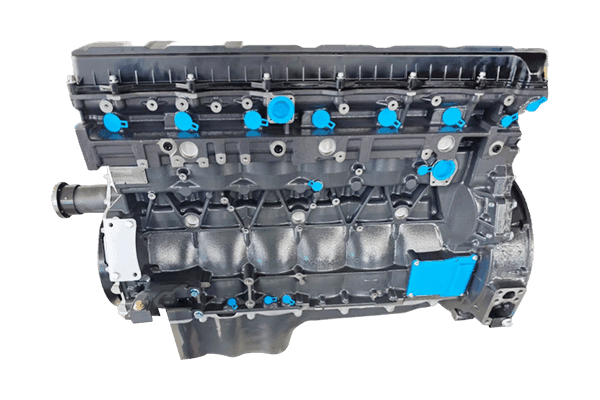
A wet vs dry cylinder liner decision should never focus only on the new part. The engine block determines whether the liner can be installed correctly.
For wet liners, inspect sealing grooves, flange seats, corrosion, lower guides, and deck condition. For dry liners, inspect the supporting bore for size, roundness, surface condition, and previous machining.
If the block requires an oversize or repair liner, that should be identified before the replacement is ordered.
Confirm Whether the Liner Is Finished or Semi Finished
Some replacement liners are supplied with a finished bore, while others require machining or honing as part of installation. This can apply differently across wet and dry designs.
When preparing a wet vs dry cylinder liner purchase, ask whether the liner is ready for installation or requires final machining. Do not assume that every new liner has a finished running surface.
MAHLE notes that cylinder liners may be finish-honed or semi-finished according to engine requirements, and that dimensional grouping systems may also be used on some applications. citeturn719940search20turn719940search1
Check Seals, Shims and Related Installation Parts
Supply scope is another important wet vs dry cylinder liner difference. Wet liners may require O-rings, sealing rings, shims, or other installation parts that dry liners do not use in the same way.
Do not assume that these items are included with the liner. Ask for a written included-components list.
The previous article on вміст комплекту поршневого вкладиша explains why seals, rings, pins, and liners should be confirmed as individual BOM items rather than assumed from the word “kit.”
Confirm Liner Quantity by Cylinder Count
Whether the engine uses wet or dry liners, confirm the exact number required. A wet vs dry cylinder liner quotation should state whether the price and quantity refer to one liner, one cylinder kit, or a complete engine set.
For a full rebuild, list the total number of liners and the number of engines being repaired. If only selected cylinders are being repaired, identify those positions and confirm whether partial replacement is allowed by the repair plan.
Build a Liner Matching Record Before Ordering
| Відповідне поле | Що Записати |
|---|---|
| Ідентичність двигуна | Повний код двигуна та фото пластини |
| Old liner reference | Visible part or casting marks |
| Liner type | Wet / dry / pending confirmation |
| Key dimensions | Bore, register/OD, flange, length as required |
| Seal arrangement | O-rings, sealing rings, shims if applicable |
| Repair status | Standard / oversize / previous machining |
| Piston match | Piston reference and required bore relationship |
| Кількість | Pieces per engine and total engines |
What to Send for a Cylinder Liner Matching Review
Для а wet vs dry cylinder liner matching review, send the complete engine code, old liner markings, clear photos of the liner and block interface, relevant dimensions, seal information, piston reference, known repair size, and required quantity.
If the liner type is not known, do not guess. Send photos of the outer wall, flange, seal grooves, and block location so the design can be reviewed.
You can submit engine details, part marks, matching dimensions, and required piece count through the сторінка контакту.
Висновок
Практична різниця в wet vs dry cylinder liner design is the liner’s relationship with the engine block and coolant. Wet liners contact coolant directly and rely on sealing rings, correct flange support, and proper protrusion. Dry liners are supported by the block bore and depend heavily on bore geometry and installation fit.
Neither design should be selected from appearance or bore diameter alone. Confirm the engine code, liner type, critical dimensions, block condition, piston match, seal arrangement, repair size, and supply scope before ordering. That approach makes liner replacement a controlled fitment decision rather than a guess based on one dimension.
FAQ
What is the main difference between wet vs dry cylinder liner?
The main difference in wet vs dry cylinder liner design is coolant contact. A wet liner is directly surrounded by engine coolant, while a dry liner is supported inside the block and separated from coolant by block material.
Do wet cylinder liners need O rings?
Wet liners normally use sealing rings or O-rings to prevent coolant leakage around the liner. The exact number, position, material, and installation method depend on the engine and must be confirmed from the correct service documentation.
Are dry cylinder liners pressed into the block?
Some dry liners are press-fit and others are slip-fit. Press-fit types depend strongly on block-bore geometry and may require final boring or honing after installation, depending on the engine design.
Which is better, wet or dry cylinder liners?
Neither design is universally better. Each is engineered for a particular block and cooling architecture. The correct choice is the liner type specified for the engine, not a preference based on general advantages.
What information is needed when ordering a cylinder liner?
Send the engine code, old liner reference, liner type if known, key dimensions, flange and seal details, piston reference, repair status, photos, and required quantity. If the wet vs dry cylinder liner classification is uncertain, include block and outer-liner photos for review.