Table of Contents
Engine piston export packing is a practical decision about the exact component, the evidence available and the next step in the repair or purchase. For an overseas buyer approving goods before dispatch, the useful result is a confirmed reference and a clear record of what remains to be checked. This guide connects export packing with the particular matching and supply questions that apply to engine piston.
Start with the export packing decision
An export-packing review should explain how the component is supported and how vulnerable features are protected. Ask for the internal arrangement before the crate is closed, including restraints, contact points, loose accessories and protective closures. Match the photographs to the actual order and identifying marks.
Use the final packed dimensions and gross weight when arranging transport. A catalogue package may represent a different accessory configuration or piece count. The review is complete when the dispatch and receiving teams understand what is inside, how it can be handled and which temporary protection must be removed. Keep packing evidence separate from the fitment approval; an excellent crate does not settle an application mismatch.
The buyer cannot inspect the item in person. Define the photographs and reports that can be reviewed remotely, then identify the checks reserved for receipt or installation. Remote approval should state the evidence examined.
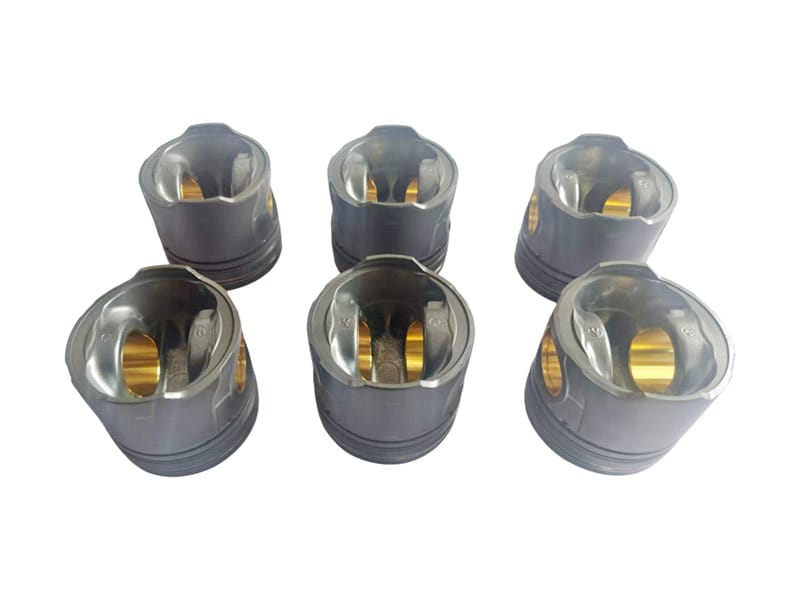
Resolve the piston package-weight and set-quantity question
The piston page lists a product weight of 0.7 kg and a packed weight of 6.8 kg. The picture contains several pistons, but it does not define how many pieces are sold in a package. Before calculating freight or comparing prices, request the exact piece count and ask what the packed-weight figure represents. Do not interpret it as the shipping weight of one piston without that check.
The stated product envelope is 86 × 86 × 72 mm, with a package of 330 × 240 × 130 mm. Those values are initial listing information. The page separately asks for the piston reference, bore, compression height, pin bore and ring-groove details. The engine-specific matching dimensions should come from the correct drawing and workshop specification, rather than from the outside envelope alone.
Confirm whether rings, piston pins and retaining clips are supplied with the piston. A single-position repair and a complete engine-set order need different quantity controls. Preserve the removed piston's markings and the associated liner or bore measurements. The final order should identify the matched components and sales unit in a way the warehouse and workshop can both verify.
Preserve damage evidence before selecting the repair
Skirt scoring, crown damage, broken ring lands and discoloration are different observations. Record the affected cylinder position and preserve the old rings and pin where relevant. The workshop should investigate lubrication, cooling, combustion and mechanical interference according to the damage pattern. A new piston does not remove the need to understand the condition of the cylinder and related parts.
Assess the liner or bore, ring specification, connecting rod and pin arrangement as part of the repair. Do not choose a repair size without a coordinated measurement and machining plan. Universal ring-gap or clearance figures are inappropriate across different engine versions. The order should identify the final piston reference, required quantity and associated components after the workshop has established the repair specification.
Protect the features that can be damaged in transit
For engine piston export packing, this review should remain tied to engine piston and the exact order under discussion.
Design the packing around the component's vulnerable features. Machined faces, precision running surfaces, open passages, connectors and projecting parts require appropriate protection. Ask how the item is restrained and where loads are carried. Packing that looks substantial from the outside can still allow movement or place pressure on a sensitive surface.
Request photographs before closure showing the support arrangement, protective material and identifying marks. Confirm whether temporary plugs or protective coatings need specific removal steps. The receiving team should know what protection is present so it is not mistaken for a permanent part of the component. Keep loose accessories contained and labeled rather than allowing them to move against finished surfaces.
Use the final packed dimensions and gross weight for transport planning. Catalogue figures are an initial guide, especially when accessories or quantity change. Confirm how the package will be handled at dispatch and receipt, and check that suitable lifting equipment is available. Keep the packing configuration linked to the actual order instead of reusing a photograph of a different item.
Build a usable identification record
For engine piston export packing, this review should remain tied to engine piston and the exact order under discussion.
Start with the identity of the installed engine and the removed component. A vehicle model can cover several engine versions, and a previous repair may have changed the installed equipment. Obtain a readable engine plate image, the complete engine code and the existing part reference. Add the vehicle identification details as supporting information. If a number is partly obscured, record the uncertainty instead of filling in the missing characters from memory.
Photograph the identifying marks at a distance that shows their location, then take a close view that makes the characters legible. Record which number came from a casting, a label, a machined marking or a previous invoice. Those sources can refer to different levels of assembly. Preserve the original image files so the supplier can examine a detail without relying on a compressed screenshot.
Ask the supplier to identify the proposed reference in writing and explain any difference from the number you supplied. A supersession or alternate reference needs a documented application check. Do not treat a similar spelling, a shared series name or a familiar-looking photograph as proof of fitment. Keep the confirmed reference attached to the quotation so it cannot be separated from the price during approval.
Make the documents describe the same shipment
For engine piston export packing, this review should remain tied to engine piston and the exact order under discussion.
The quotation, order confirmation, inspection record and packing list should describe the same references and quantities. Check spelling and model designations carefully, especially where a catalogue contains an abbreviated name. A document discrepancy should be resolved before dispatch rather than left for the receiving team to interpret.
Keep shipment-level information separate from technical fitment evidence. A packing list can show what was shipped, but it does not establish that a component suits the installed engine. An inspection report can describe checks performed, but it may not define the commercial contents of the order. Use each document for the question it can actually answer.
Create a compact record containing the approved reference, final configuration, required evidence and current quotation revision. Preserve the originals of supporting files. If the order is revised, make the superseded version easy to distinguish so a warehouse or workshop does not use an old list. The result should allow another person to reconstruct the purchase without relying on the buyer's memory.
Use the listed product information correctly
The engine piston listing provides the following starting information. These are site-listed values for inquiry and handling planning. Confirm the final reference, supplied configuration, piece count and packed dimensions in the actual quotation; the listing is not a complete service drawing.
| Listing field | Site-listed information |
|---|---|
| Handling method | Manual handling |
| Product dimensions | 86 mm × 86 mm × 72 mm |
| Packed dimensions | 330 mm × 240 mm × 130 mm |
| Listed product weight | 0.7 kg |
| Listed packed weight | 6.8 kg |
Listed product and packed weights do not establish pieces per package; confirm quantity.
Compare the evidence before approving the order
This engine piston export packing comparison separates the information needed for a purchase from what a product photograph can establish. Use the table as a working record and replace each open point with the actual reference, report or agreed configuration.
| Decision item | Evidence to obtain | If evidence is missing |
|---|---|---|
| Piston identity | Engine code and existing piston reference | Hold approval until this item is clear |
| Geometry | Crown/bowl, compression height, pin and ring arrangement | Hold approval until this item is clear |
| Repair specification | Bore condition and approved standard/repair size | Hold approval until this item is clear |
| Included parts | Rings, pins and clips itemized | Hold approval until this item is clear |
| Sales unit | Single piston or confirmed engine-set quantity | Hold approval until this item is clear |

Prepare the next supplier and workshop handover
Before closing engine piston export packing, assemble the engine plate image, existing reference, relevant photographs and the workshop findings into one inquiry record. Add the required quantity, destination and itemized supply scope. Ask the supplier to respond to the open points individually and keep the answer attached to the quotation revision.
Use the relevant product category to locate the component family, then return to the exact reference for the application check. If another part is required by the repair, create a separate line with its own matching evidence. Keep the export packing decision and the final installation approval as identifiable steps in the record.
Frequently Asked Questions
What is the starting point for engine piston export packing?
Start with the full engine identification and the reference on the existing piston. Add the evidence specific to export packing, the quantity and the proposed supply configuration. A model name or photograph alone does not establish compatibility.
Can a photograph settle export packing for this part?
A photograph can show visible geometry, markings and condition. It cannot establish every dimension, internal property or operating requirement. For engine piston, combine useful views with the part reference and the appropriate workshop evidence.
Are the dimensions on the product page a fitting specification?
Use each listed dimension only for its stated purpose. Overall product or packed dimensions help identify and handle an item. Precision fits and service limits require the drawing and service information for the exact engine and component.
Which supplied items should the quotation identify?
The quote should name the main piston, the quantity and any fitted or loose accessories. Identify excluded parts and anything transferred from the old installation. The product image does not define the contractual contents of the order.
What should be confirmed before the part is released?
Close the reference and supply-scope questions, check the available evidence and identify any checks reserved for the receiving or installing team. Keep the engine piston export packing record with the accepted quotation and the actual shipment identifiers.
Discuss your engine piston requirement with Cheyu. Send the complete engine code, existing part reference, quantity and destination through the inquiry form. Include the open questions from this export packing review so the quotation can address the actual component and configuration you need.