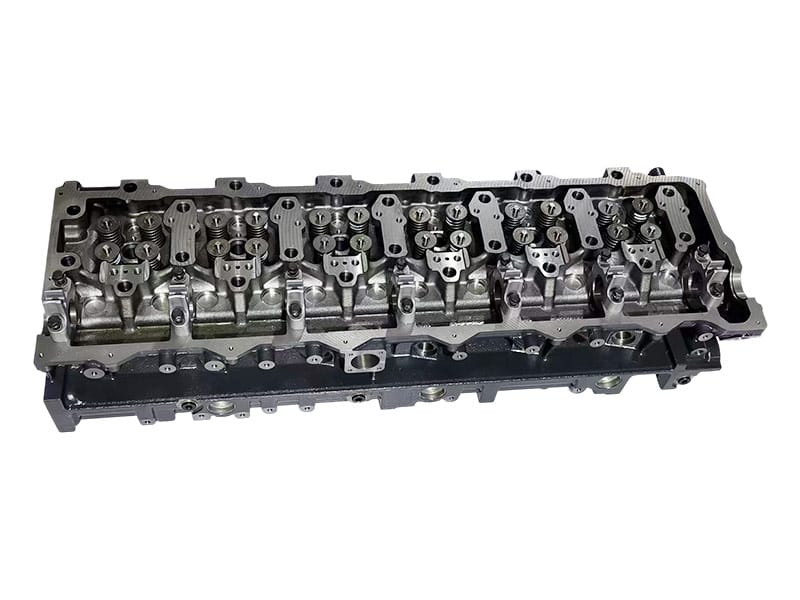
A clear cylinder head RFQ should help a supplier answer more than one question. It should identify the engine, identify the old head, define whether the buyer needs a bare or fitted replacement, show the required quantity, and explain any application details that could affect fitment. A short message such as “need one cylinder head” may start a conversation, but it does not give enough evidence for a reliable quotation.
For heavy truck repairs, the goal of a cylinder head RFQ is to reduce wrong-part risk before the quote is issued. That means combining engine data, head references, casting marks, multi-angle photos, supply scope, quantity, and destination into one organized request. This guide shows how to build that request without assuming that one casting number, one engine family name, or one product photo is enough to confirm compatibility.
Why a Cylinder Head RFQ Needs Technical Evidence
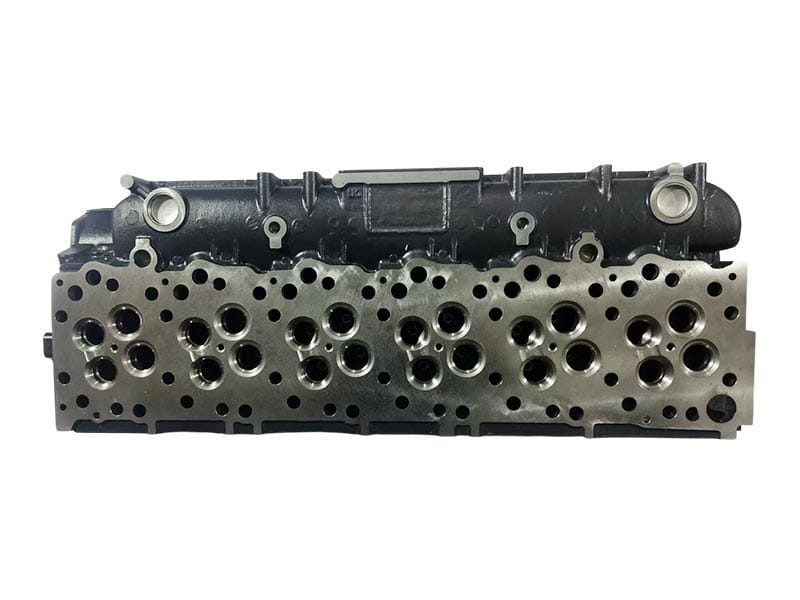
A cylinder head is not a generic replacement component. Heads used within one engine family can differ in machining, injector features, port layout, valve-train arrangement, coolant passages, oil passages, mounting details, or fitted components. For that reason, a cylinder head RFQ should carry enough technical evidence to distinguish the required version.
The current engine cylinder head category lists several replacement-head products and asks buyers to share engine information for parts matching. That is the right starting point: the category helps identify the likely product family, while the RFQ provides the evidence needed to narrow the exact application.
A reliable quotation should therefore answer two separate questions: “Which cylinder head is being proposed?” and “What evidence supports that match?”
Start With the Complete Engine Code
The first field in a cylinder head RFQ should be the complete engine model or code exactly as shown on the current engine identification plate or reliable service documentation.
Do not shorten the code to a broad family name if a more specific version is available. The same family can contain multiple variants, and a supplier may not be able to determine which head is correct from the family name alone.
If the engine plate is readable, attach a clear full-frame photo. Do not crop away nearby serial, production, rated-power, or version information that may help distinguish the engine.
Include the Old Cylinder Head Reference
The old head should be inspected for stamped, engraved, cast, or labeled references. Add every readable number to the cylinder head RFQ and photograph where each marking appears.
Do not assume every number is the final orderable part number. A casting number can identify the casting family while a finished part number may identify the machined and assembled configuration. This distinction is recognized in engine-industry identification guidance: a casting number and finished head part number can differ and serve different purposes.
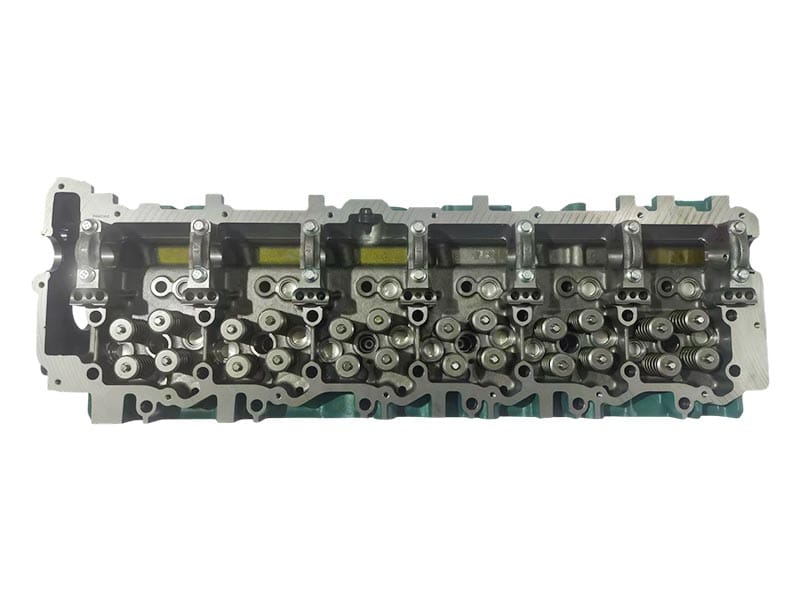
The D0834 cylinder head page, for example, lists reference 51031006274 and advises buyers to compare that reference with the complete engine code and photos of the existing head before ordering.
Do Not Treat the Casting Number as the Only Match
A casting number is useful, but a strong cylinder head RFQ should not rely on it alone. The same casting family may be machined or assembled differently for different engine versions.
Use the casting number together with the engine model, finished reference where available, visible port layout, injector-related features, mounting faces, and required bare or complete configuration.
If the casting number is partly unreadable, send a close-up and a wider photo showing its location. Do not guess missing digits. Mark them as uncertain so the supplier can compare the rest of the evidence.
Attach a Standard Photo Set
Photos can dramatically improve a cylinder head RFQ when they are taken from useful angles. One top-view image is rarely enough.
| Photo | What It Should Show | Why It Matters |
|---|---|---|
| Full top view | Complete head and valve-train area | Shows overall configuration |
| Combustion face | Gasket surface, chambers, passages, bolt holes | Supports physical comparison |
| Intake side | Ports, bolt holes, sensors, cast marks | Shows intake interface |
| Exhaust side | Ports and mounting pattern | Shows exhaust interface |
| Front and rear | End faces and connection features | Reveals hidden variation |
| Reference close-ups | Stamped and cast numbers | Preserves identification evidence |
| Engine plate | Full identification plate | Connects head to engine |
Keep the original-resolution files. Messaging apps can compress images enough to make small stamped characters difficult to read.
State Whether You Need a Bare or Fitted Head
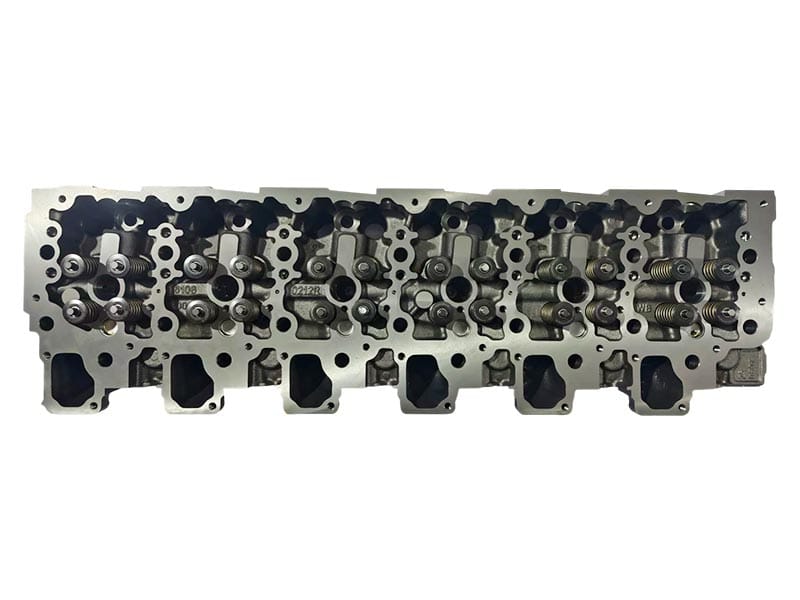
Supply scope is one of the most important parts of a cylinder head RFQ. The buyer should state whether the request is for a bare head, a machined head, or a head with fitted valve-train components.
The previous guide on bare vs complete cylinder head explains why “complete” should not be treated as one universal configuration.
If valves, springs, guides, seats, injector tubes, camshaft-related components, plugs, gaskets, seals, or other items are required, list them individually. Do not assume that components shown in a product image are automatically included.
Ask for an Included and Excluded Components List
A professional cylinder head RFQ should require the supplier to return an itemized supply scope. This makes quotations easier to compare and reduces disputes after delivery.
| Component | Buyer Requirement | Supplier Included? |
|---|---|---|
| Cylinder head casting | Required | Confirm |
| Valves | Yes / No | Confirm |
| Valve springs | Yes / No | Confirm |
| Guides and seats | Yes / No | Confirm |
| Injector tubes or sleeves | Yes / No | Confirm |
| Camshaft / rocker components | Yes / No | Confirm |
| Plugs | Yes / No | Confirm |
| Gaskets and seals | Yes / No | Confirm |
Record the Required Quantity Clearly
Quantity sounds simple, but it should still appear as a dedicated field in the cylinder head RFQ. State the exact number of heads required and whether all units are for the same engine version.
If a distributor is buying multiple applications, use one RFQ line per distinct head. Do not combine different engine codes under one general description.
If the buyer needs only one sample for technical approval before a larger order, state that separately so the supplier understands the purchasing sequence.
Add the Destination Country and Delivery Point
A cylinder head RFQ should include the destination country and, where known, the delivery city, port, or warehouse. This allows the supplier to prepare the correct commercial and packing information.
Destination can also affect documentation requirements, labeling, and shipping preparation. Keep those commercial details separate from the fitment data so technical review and logistics review do not become mixed together.
Do not include a target delivery assumption that the supplier has not confirmed. Ask for the proposed delivery basis and timing in the quotation.
Include Vehicle or Equipment Context When Useful
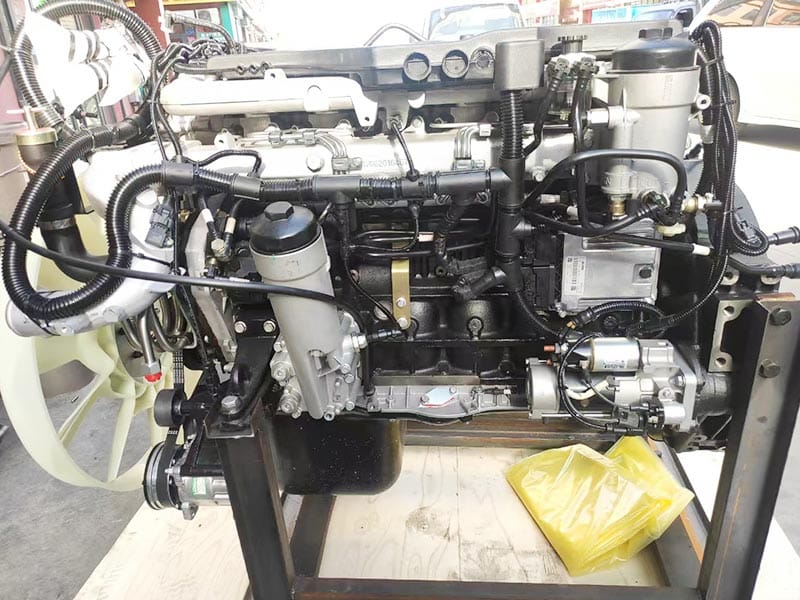
The engine code should remain the primary engine identifier, but vehicle or equipment information can support a cylinder head RFQ. Add the truck model, VIN, production year, or fleet unit number when available.
A VIN can help establish vehicle context, but it should not replace current engine information. The vehicle may have had an engine replacement or major rebuild during its service life.
The earlier engine parts VIN lookup article explains why VIN and engine-plate data should be treated as complementary rather than interchangeable.
Explain Known Repair History
Previous machining or repair history can affect a cylinder head RFQ. If the old head has been resurfaced, repaired, replaced, or modified before, mention that history.
This is particularly important when the current head reference conflicts with catalog expectations. An engine may contain a replacement head installed during a previous overhaul.
Do not assume the existing head is original simply because the vehicle itself has never been replaced.
Describe the Failure Without Over Diagnosing It
A short repair summary can help the supplier understand the project. If the head is being replaced after overheating, cracking, coolant loss, or another failure, include the confirmed facts.
However, a cylinder head RFQ should not turn an unconfirmed symptom into a root-cause statement. Write “coolant loss and crack indication found during inspection” rather than “cooling system caused the failure” unless that cause has actually been demonstrated.
The cracked cylinder head symptoms guide explains why symptoms and confirmed defects should be kept separate.
Use Measurements Only When They Resolve a Real Fitment Question
Dimensions can strengthen a cylinder head RFQ, but they should be functional measurements, not random overall dimensions.
Useful measurements may include a specific port spacing, mounting-hole distance, or interface dimension requested by the supplier. Record the measuring points and method.
Do not copy dimensions from another listing and present them as measurements from the actual head. The purpose of measurement is to resolve uncertainty, not to create the appearance of technical detail.
Ask the Supplier to State the Matching Basis
A useful response to a cylinder head RFQ should explain why the proposed head matches the request.
The supplier can state the proposed reference, engine application, casting relationship, and any relevant interface comparison. If the proposed reference differs from the buyer’s old number, ask whether it is a supersession, cross-reference, or different configuration.
This is more useful than receiving a one-line quote with no technical explanation.
Separate Reference Matching From Source Claims
Another important cylinder head RFQ rule is to separate part-number matching from claims about origin.
A supplier may use an original application reference to identify compatibility. That does not automatically establish that the quoted head is supplied through the original equipment channel.
If source identity matters to the purchasing specification, ask for the evidence supporting that claim separately. The application reference should remain part of fitment matching, not proof of origin by itself.
Ask for Product Specific Inspection Evidence
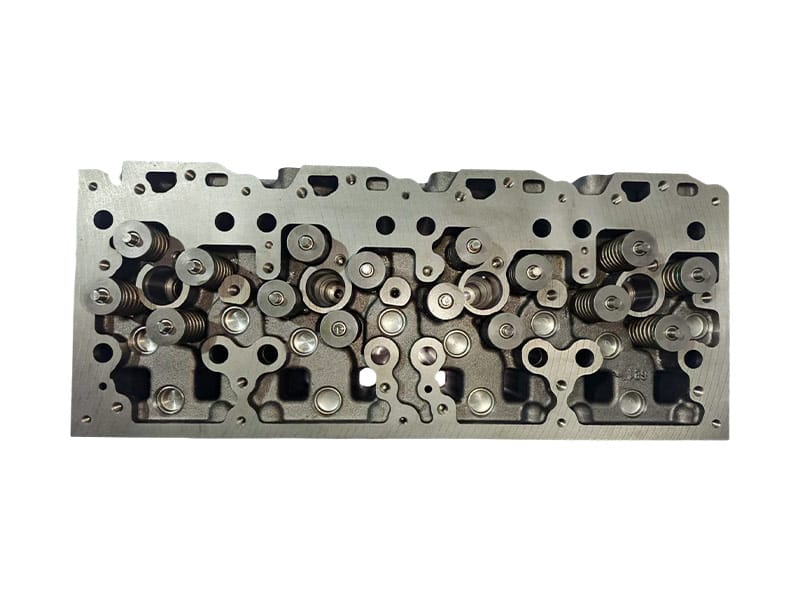
Depending on the order, the cylinder head RFQ may request identification photos, dimensional inspection, pressure-test records, crack-test records, or other product-specific evidence.
Do not request a generic “quality certificate” without defining what information is useful. A general quality-management statement does not prove the condition or fitment of one specific head.
The receiving guide on cylinder head inspection checklist shows how identity, surfaces, cracks, ports, threads, components, and records can be checked before workshop installation.
Use a Quote Ready Cylinder Head RFQ Table
The following table can be used as a practical cylinder head RFQ format.
| RFQ Field | Buyer Should Provide | Supplier Should Confirm |
|---|---|---|
| Engine code | Full engine model/code and plate photo | Application reviewed |
| Head reference | Old part number and visible markings | Quoted replacement reference |
| Casting number | Photo and location | Relationship to proposed head |
| Photos | Top, deck, sides, front and rear | Physical features reviewed |
| Supply scope | Bare or fitted requirement | Included/excluded list |
| Quantity | Exact pieces required | Quoted quantity |
| Destination | Country and delivery point | Logistics scope |
| Inspection records | Required documents | Available records |
Review the Quotation Before Approving the Order
The cylinder head RFQ process should not stop when the price is returned. Compare the supplier’s response against the original evidence.
Check the engine application, proposed head reference, supply scope, quantity, destination, inspection documents, and any unresolved differences.
If the quoted head has a different casting or finished reference, ask for the explanation before approval. If the supplier has added or removed fitted components, update the BOM before the order is released.
What to Send With a Cylinder Head RFQ
For a practical cylinder head RFQ, send the complete engine code, engine-plate photo, old head reference, casting marks, multi-angle head photos, required bare or fitted configuration, exact quantity, destination country, and any required inspection documents.
If the head is missing or too damaged to identify, send the best available engine data, vehicle information, previous invoice references, and photographs of the engine installation.
The D2066 and D2076 cylinder head page specifically asks buyers to provide the exact engine variant, existing head number, required components, quantity, and destination country before a quotation is issued.
You can submit the information through the contact page for a parts-matching review.
Conclusion
A useful cylinder head RFQ is a technical matching document as well as a purchasing request. It should identify the engine, identify the existing head, show the physical interfaces, define the bare or fitted configuration, state the quantity, and identify the destination.
The most important improvement is to stop treating one casting number or product photo as a complete fitment answer. When engine code, part reference, casting marks, photos, supply scope, and quantity are reviewed together, the supplier can prepare a quotation on a much stronger technical basis and the buyer has fewer unresolved questions before ordering.
FAQ
What information should a cylinder head RFQ include?
A cylinder head RFQ should include the full engine code, engine-plate photo, old head reference, casting number, multi-angle photos, bare or fitted configuration, required components, quantity, destination, and any inspection-document requirements.
Is a casting number enough to order a cylinder head?
No. A casting number is useful identification evidence, but it may not confirm final machining, valve setup, injector arrangement, or full application. Compare it with the engine code, finished reference, physical interfaces, and required supply scope.
Should I request a bare or complete cylinder head?
That depends on the repair scope and condition of the reusable components. Do not rely on the word “complete” alone. List the valves, springs, guides, seats, injector tubes, camshaft-related components, plugs, gaskets, and other items required.
What photos are most useful for a cylinder head RFQ?
Send the full top view, combustion face, intake side, exhaust side, front and rear ends, close-ups of all numbers, and the engine identification plate. Keep the original-resolution files.
Why does destination matter in a cylinder head RFQ?
The destination helps the supplier prepare shipping, packing, documentation, and commercial terms. It should be included alongside quantity and technical data, but it does not replace the fitment information needed to select the correct head.