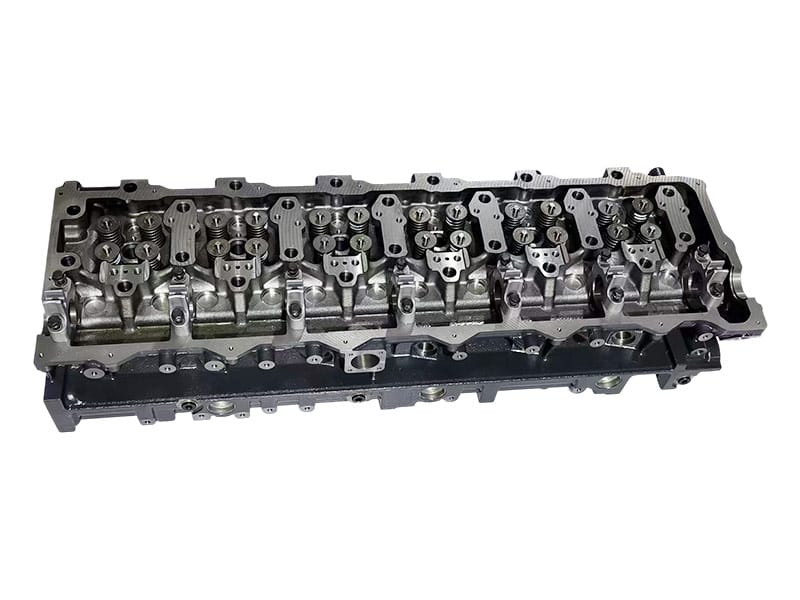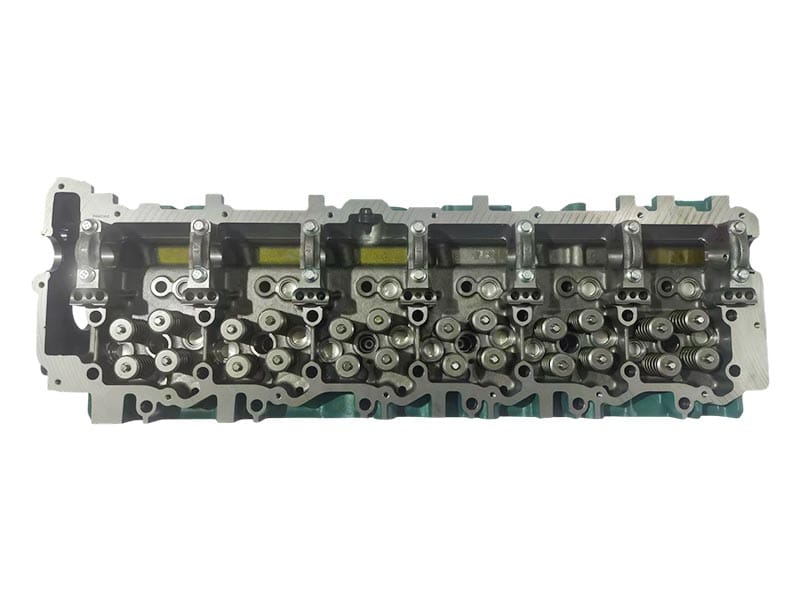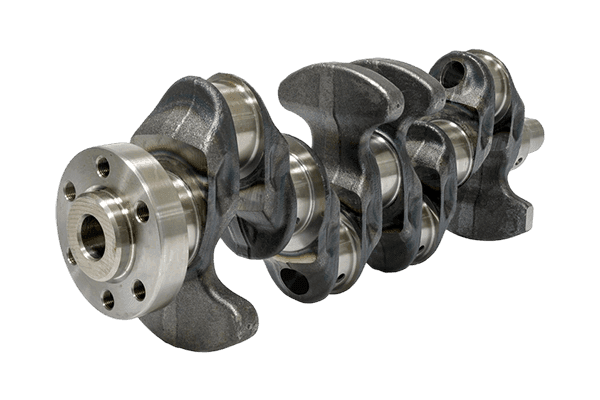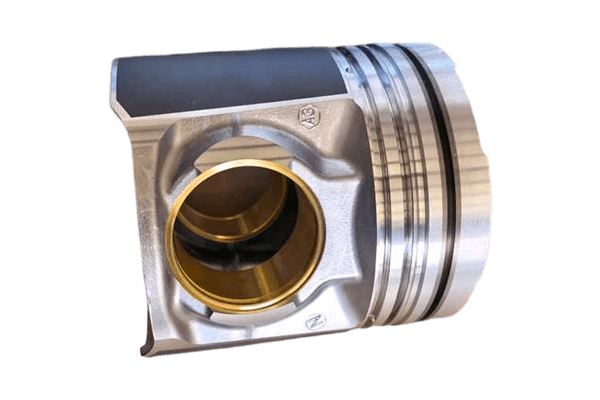
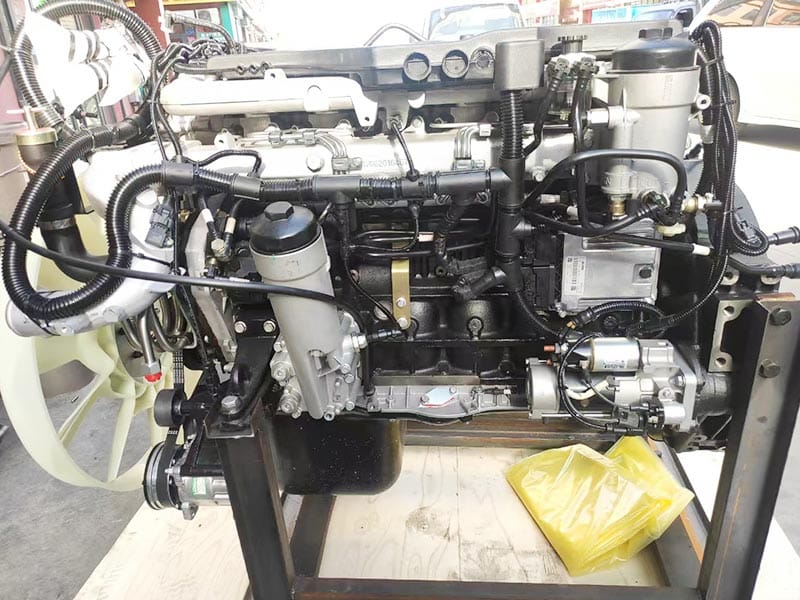
An engine assembly inspection before overseas shipment should answer more than one question: is the engine the version the buyer approved, is the quoted supply scope actually present, and is there enough evidence to release that unit for packing and transport?
For a heavy-truck replacement engine, those checks matter because a clean exterior and a matching series name do not prove installation compatibility. An engine may still differ in mounting points, transmission connection, cooling interfaces, electronic controls, accessory content, emission configuration or other details that affect the repair.
This guide explains how buyers, workshops and suppliers can organize an engine assembly inspection without turning a generic checklist into a substitute for the correct engine documentation. The goal is a traceable release decision based on the exact quotation, the approved identification and the evidence available for the specific assembly.
Start the Engine Assembly Inspection With Identity, Not Appearance
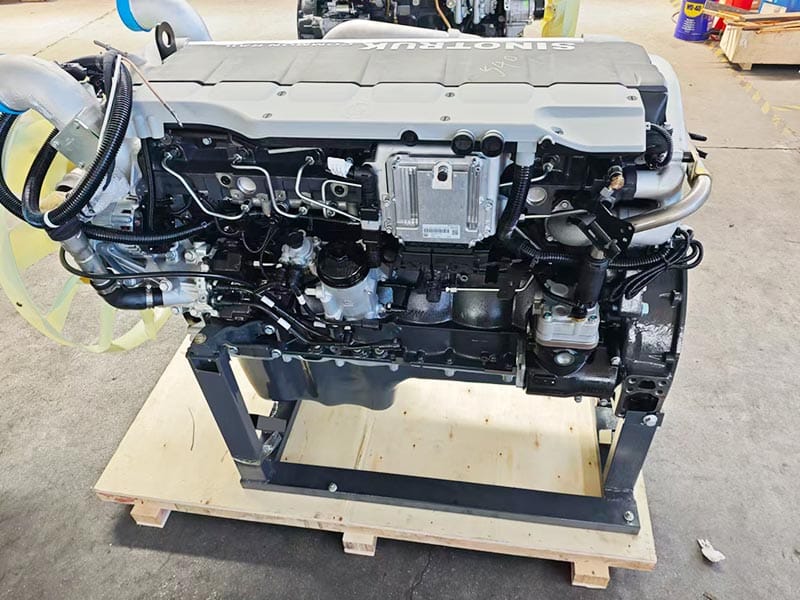
The first task in an engine assembly inspection is to prove which engine is being inspected. Do not begin with paint condition, pallet quality or a general “looks complete” judgment. Record the engine plate, engine code, serial or production identification when available, and the vehicle or equipment information supplied by the buyer.
For the MC07 engine assembly listing, Cheyu asks buyers to provide the complete engine code, rated power and speed, emission version and fuel-system details from the available documentation. The page also states that the series name alone should not be treated as proof that an assembly is ready to install.
A sound engine assembly inspection therefore links the physical unit to the purchase order, approved quotation and matching records. If one identifier conflicts with another, stop the release and resolve the discrepancy before the crate is closed.
Freeze the Approved Supply Scope Before Inspection Begins
“Engine assembly” can describe different supply scopes in different transactions. One quotation may include external accessories that another quotation excludes. Inspection becomes unreliable if the buyer and supplier are using the same product name but different definitions of what should be in the shipment.
Before the engine assembly inspection, convert the quotation into an itemized acceptance list. A disciplined engine assembly inspection starts from that frozen scope rather than from assumptions made at the warehouse. For example, confirm whether the required configuration includes the electronic control unit, wiring harness, turbocharger, starter, alternator, sensors, brackets or other external components. Do not infer inclusion from photographs.
The D2066 and 2760 engine assembly listing explicitly tells buyers to confirm which components are supplied and which must come from the existing installation. That principle should be applied to every shipment: the inspection checks the agreed BOM, not an imagined definition of “complete.”
Use a Release Matrix Instead of a Vague Pass or Fail
A useful checklist identifies what is being checked, the requirement, the evidence and the result. This prevents an inspector from signing “PASS” without showing what the word means.
| Inspection area | Evidence to compare | Release question |
|---|---|---|
| Engine identity | Engine plate, code, serial details, approved quotation | Is this the exact approved variant? |
| Supply scope | Itemized BOM, quotation, accessory list | Are required included parts present and exclusions understood? |
| Interfaces | Installation photos, drawings, application data | Do mounts, connections and control interfaces match the approved requirement? |
| Condition | Visual inspection record, preservation status, photographs | Is damage, contamination or open-port exposure visible? |
| Test evidence | Applicable test report or inspection record | Does the document identify this unit and state what was actually tested? |
| Packing release | Final photos, crate or pallet details, handling marks | Can the approved unit be traced after it is packed? |
This structure follows a broader inspection principle described by ISO/IEC 17020:2026: inspection examines an item against specified requirements and should produce reliable, consistent results. Referencing the standard does not mean a supplier or a particular inspection is accredited to it.
Verify Mounting and Transmission Interfaces Before Packing
Two engines from the same broad family may still require different installation arrangements. During engine assembly inspection, compare the approved mounting positions, flywheel or transmission connection, bellhousing-related interfaces and other installation-critical features with the buyer’s reference information.
Do not rely on memory or exterior similarity. A buyer replacing an existing engine should provide clear photographs of the old installation, the full engine identification and any known interface references. When dimensions or drawings are required, use the specific approved documentation rather than a value copied from another variant.
If the receiving workshop will transfer parts from the old engine, record that decision before shipment. The inspection should show which interface is supplied, which component remains the buyer’s responsibility and whether any adaptor or transfer work is expected.
Check Cooling, Intake, Exhaust and Fuel Connections as Interfaces
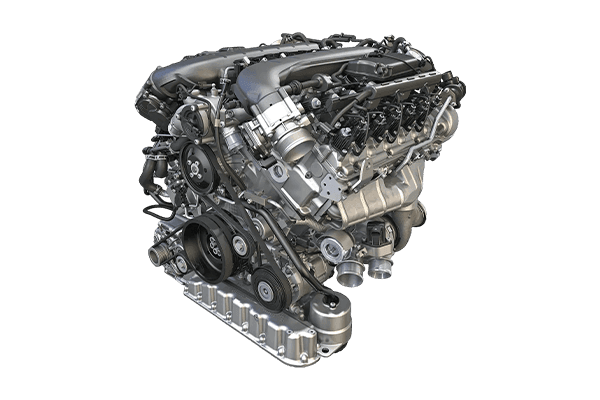
Connection orientation can create major installation work even when the basic engine block is correct. An engine assembly inspection should therefore review the visible cooling connections, intake and exhaust interfaces, fuel-system connections and related attachment points that matter to the approved installation.
The purpose is not to prove performance by looking at a port. It is to reduce the risk that the workshop receives an engine with a connection arrangement different from the one it approved.
Photograph critical interfaces from repeatable angles and include a scale or reference when dimensional comparison is required. If the buyer supplied photographs of the removed engine, place corresponding images side by side in the release record. This is more useful than sending a group of unlabeled warehouse photos after packing.
Separate Electronic Compatibility From Mechanical Fit
A mechanically similar assembly can still create problems if the electronic and control configuration is different. During engine assembly inspection, identify which control components are included and which are not, and compare the available engine information with the buyer’s stated emission and control-system requirements.
Do not assume that an ECU, wiring harness or sensor shown in a product photograph is included in every quotation. Likewise, do not promise plug-and-play compatibility unless the specific control architecture and application have been confirmed.
For procurement teams, this is one reason to send the engine plate and installation details before placing the order. Cheyu’s engine parts and assemblies catalogue can be used to identify the relevant product group, but the final match still depends on the exact engine and supply specification.
Inspect External Condition Without Mistaking Cosmetics for Quality
Visual condition is important, but it should occupy the correct place in an engine assembly inspection. Check for visible transport or handling damage, broken connectors, loose external parts, missing covers, corrosion signs, fluid residue, open ports, damaged threads and contamination risk.
Good paint does not prove internal condition. Conversely, a superficial cosmetic mark does not automatically establish a functional defect. Record what is visible and route any nonconformity to the appropriate technical review rather than making unsupported conclusions.
Openings intended to remain protected during storage and transport should be checked for appropriate caps, covers or preservation measures according to the applicable shipping and product requirements. The release record should distinguish “visual condition accepted” from “functional performance tested.”
Confirm That Measurement Evidence Is Traceable to the Unit
If the release depends on a measured characteristic, the record should identify the measurement, the instrument or system used where relevant, the applicable requirement and the unit to which the result belongs. A number without context provides weak evidence.
The NIST policy on metrological traceability explains that traceability depends on a documented chain to specified references and that traceability alone does not guarantee fitness for a particular purpose. For an engine assembly inspection, the practical lesson is simple: record enough information to understand what was measured and why the result supports the release decision.
Do not place a calibration sticker in a photograph and describe the engine as “certified.” Instrument status, measurement method, acceptance limit and product conformity are different concepts.
Understand What a Test Report Does and Does Not Prove
Buyers often ask for test evidence, but a report only helps when its scope is clear. Before relying on a report during engine assembly inspection, check whether it identifies the actual engine, lists the test or inspection performed, records the relevant conditions and results, and is tied to a defined acceptance basis.
A test report from another engine, another batch or another configuration should not be presented as unit-specific evidence. Likewise, a generic factory capability statement does not prove that this particular engine completed a stated test.
ISO 9001:2026 emphasizes controlled processes, documented information, monitoring and evaluation within a quality management system. It is useful as a framework for thinking about records, but the existence of a quality system is not a substitute for the actual inspection and test evidence required by the buyer.
Review Preservation Before Long-Distance Transport
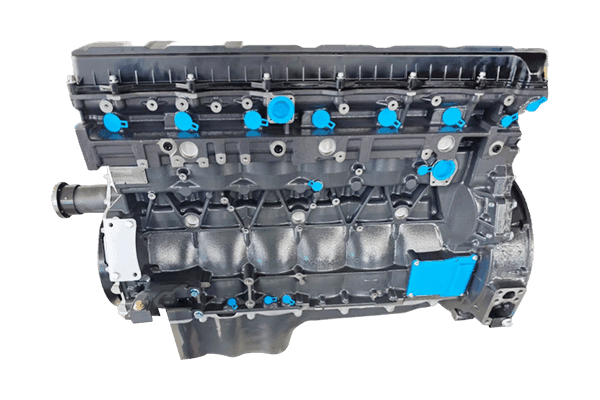
Overseas transport can expose an engine to extended storage, handling changes, humidity and contamination risk. The engine assembly inspection should therefore include the preservation and protection condition required for the agreed shipment.
Check whether exposed openings are protected, loose accessories are secured, vulnerable connectors are shielded and the packaging arrangement prevents foreseeable contact damage. Any corrosion-prevention method should be appropriate for the product and shipping plan rather than copied from a generic checklist.
If the engine will remain stored after arrival, the buyer should tell the supplier in advance. Storage duration and environment can affect the preservation requirement. Avoid promising a universal storage period unless the packaging and preservation specification supports it.
Match Handling Equipment to the Actual Packed Load
The product pages provide listed product and packed weights for specific engine assembly listings, but the final shipping weight can change with accessories and packaging. Therefore, final handling decisions should use the confirmed shipment configuration.
OSHA’s forklift loading and unloading guidance highlights the risks involved in material handling, while its powered industrial truck rules require loads to be stable and within the truck’s rated capacity. Those resources are workplace-safety references, not an engine packing specification.
During engine assembly inspection, confirm that the handling marks and planned lifting or forklift method correspond to the approved package. Do not improvise lifting from engine components or use an unverified point simply because it is convenient.
Photograph the Engine Before and After Packing
Photographs are most valuable when they create a sequence. In an engine assembly inspection, that sequence should preserve the unit identity before and after packing. Before packing, capture the engine identification, four-side general condition, critical interfaces, included accessories and any agreed inspection marks. After packing, photograph the preservation, securing arrangement, package identification and external condition.
Use filenames or captions that connect the images to the order and unit. A strong engine assembly inspection record lets the receiving team answer, “Is this the same unit that was approved?” without guessing from paint color or crate shape.
Keep sensitive customer information out of public marketing images. Inspection evidence should be stored and shared according to the buyer-supplier process, not automatically published.
Record Nonconformities Before the Engine Is Released
A good inspection process expects the possibility of a discrepancy. If the wrong accessory is installed, a connector is damaged, a required document is missing or an identifier conflicts with the order, create a clear nonconformity record before packing.
The record should state the observed issue, the requirement it conflicts with, the disposition and who approved the final action. After correction, recheck the affected item. Do not erase the original finding and leave only a clean final checklist.
This makes the engine assembly inspection useful for future purchasing and supplier review. Repeated discrepancies can reveal where quotation wording, picking controls, documentation or packing instructions need improvement.
Build a Shipment Release Packet the Receiver Can Actually Use

The final packet should help the overseas workshop verify the shipment before installation. A complete engine assembly inspection packet should let the receiver retrace the release decision without depending on verbal explanations. Depending on the agreement, it may contain the approved engine identification, supply-scope list, inspection checklist, relevant test records, nonconformity closure, packing photographs and shipment identification.
It is also useful to state what the packet does not establish. For example, a visual release record does not prove internal clearances, and a dimensional check does not prove dynamic performance.
| Release document | Why it matters | Common mistake to avoid |
|---|---|---|
| Identity record | Links the physical engine to the approved order | Using only a broad engine family name |
| Supply-scope sheet | Shows included and excluded accessories | Assuming every visible component is included |
| Inspection checklist | Shows what was checked and against which requirement | Signing “PASS” without defined criteria |
| Test or measurement record | Supports specific technical acceptance points | Using a generic or unrelated report |
| Packing photos | Preserves evidence of condition at release | Taking only exterior crate photographs |
| Exception closure | Shows how identified issues were resolved | Deleting the original discrepancy from the record |
An organized packet turns engine assembly inspection into a usable handover rather than a warehouse formality.
What Buyers Should Send Before Requesting an Engine Assembly
Inspection quality starts before the engine is selected. Send the complete engine plate, vehicle or equipment model, existing engine photographs, required quantity and destination. Include the known rated power and speed, emission version, fuel-system information and installation details when available.
Then define the required supply scope. If you need the ECU, harness, turbocharger, starter, alternator or other accessories, state that in the RFQ instead of waiting for final inspection to discover a difference.
For a matching review, use the Cheyu contact page and provide the identification and installation information with your inquiry. The better the approved input, the more meaningful the engine assembly inspection can be before shipment.
Conclusion
An engine assembly inspection should create a chain of evidence from the buyer’s requirement to the engine released for export. Confirm identity first, freeze the supply scope, check installation-critical interfaces, review available test evidence, document visible condition and preserve traceability through packing.
The most important principle is not to let appearance substitute for verification. A clean engine with the correct family name can still be the wrong configuration, while an impressive test sheet can still be irrelevant if it cannot be linked to the shipped unit.
If you are preparing a replacement-engine order, send Cheyu the engine plate, current installation details, required accessory scope, quantity and destination before quotation. That information allows the inspection criteria to be tied to the actual order instead of a generic checklist.
FAQ
What should an engine assembly inspection check first?
Start with engine identity. Compare the engine plate, complete engine code and available serial or production information with the approved quotation and buyer records before evaluating condition or accessories.
Does a complete engine assembly include the ECU and wiring harness?
Not automatically. Inclusion depends on the quoted supply scope. Confirm the ECU, harness, turbocharger, starter, alternator and other external components individually before the order is released.
Is a visual inspection enough before overseas shipment?
No. Visual condition is one part of acceptance. The required engine assembly inspection may also need identity verification, BOM review, interface checks and unit-linked test or measurement records according to the order.
Can a generic test report be used for every engine in a shipment?
Only if the agreed inspection plan legitimately defines a lot-level or shared test and the document clearly supports that scope. Do not represent a report as unit-specific evidence when it cannot be linked to the inspected engine.
What information should a buyer provide before engine matching?
Provide a clear engine plate photograph, complete engine code, vehicle or equipment details, current installation photographs, known configuration information, required accessory scope, quantity and destination. Additional data may be required for the specific application.