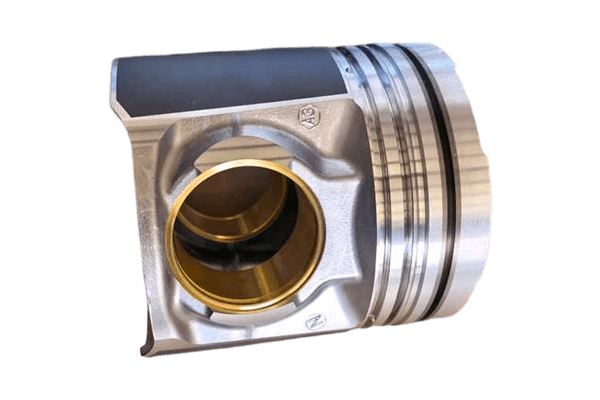
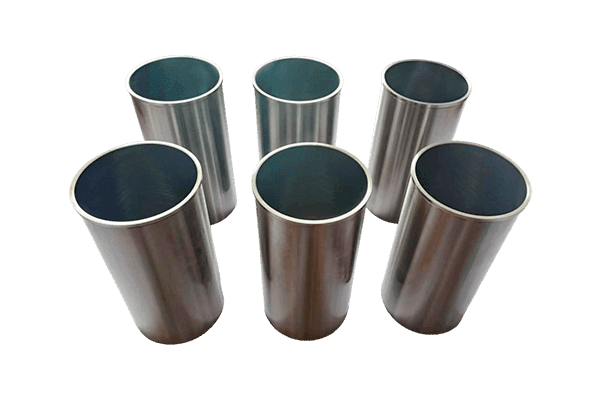
Piston and liner matching is not simply finding two parts with the same nominal bore. Before a rebuild order is approved, the buyer and workshop need to confirm the engine application, piston geometry, liner configuration and supporting components against the applicable specification.
A useful quotation identifies the proposed parts, the evidence supporting their compatibility and the checks still required before assembly. This guide focuses on that purchasing decision, helping truck repair businesses and parts distributors turn incomplete descriptions into an order the receiving workshop can verify.
Table of Contents
What Correct Piston and Liner Matching Must Establish
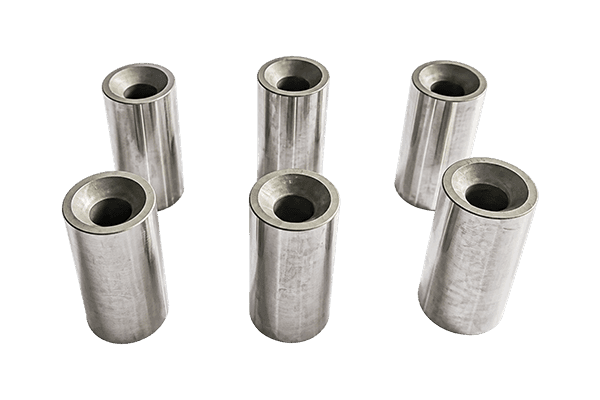
Separate the review into application identity, component specification and measured condition. A correct engine reference starts the search; it does not replace dimensional verification. Likewise, a suitable measured diameter does not establish that the crown, pin arrangement or liner seating features belong to the intended engine.
Our engine piston information requests bore, compression height, pin bore and ring groove details separately from overall product dimensions. That distinction matters: a catalogue’s outside dimensions cannot be treated as a finished cylinder bore specification.
For piston and liner matching, agree who confirms application identity and who approves the final measured fit. A supplier can identify the proposed component, while the rebuilding workshop must evaluate the engine and any machining already performed.
Start With Engine Identity and Repair History
Send the complete engine code and a readable identification plate photograph. Include the old piston and liner markings, but label each reference accurately. An engine serial number, a casting mark and a service part number answer different questions.
Piston and liner matching becomes less reliable when an inquiry contains only a truck model or a cropped photograph. Keep the original markings visible, photograph the crown and underside, and identify which cylinder each removed component came from.
Ask whether the engine has previously received replacement liners, machining or nonstandard components. Treat the removed parts as evidence of its present condition, not automatic proof of its original specification. Where repair history is unknown, say so instead of entering “standard” by default.
Match the Piston Design Beyond Nominal Bore
Compression Height Is Not Overall Height
Ask for a dimensioned drawing that identifies the pin centerline and the specified crown reference. Confirm compression height against that drawing rather than substituting the piston’s overall height. For piston and liner matching, this is a specification question to resolve before an order, not a dimension to estimate from a photograph.
Keep the drawing revision with the approved part reference. When a supplier offers an alternative piston, request a documented comparison of the relevant features instead of accepting “same size” as a complete description.
Crown Details and Supporting Interfaces Need Their Own Review
Have the technical reviewer compare crown and bowl configuration, ring groove arrangement, pin interface and any cooling-related features specified for the engine. Do not assume that a visually similar piston has the same functional design.
The heavy-truck engine assembly task list treats piston height and piston cooling nozzle checks as distinct assembly tasks. Piston and liner matching should therefore leave these responsibilities visible in the repair plan rather than declaring the engine ready once the replacement parts arrive.
Separate Liner Fit From Piston Running Clearance
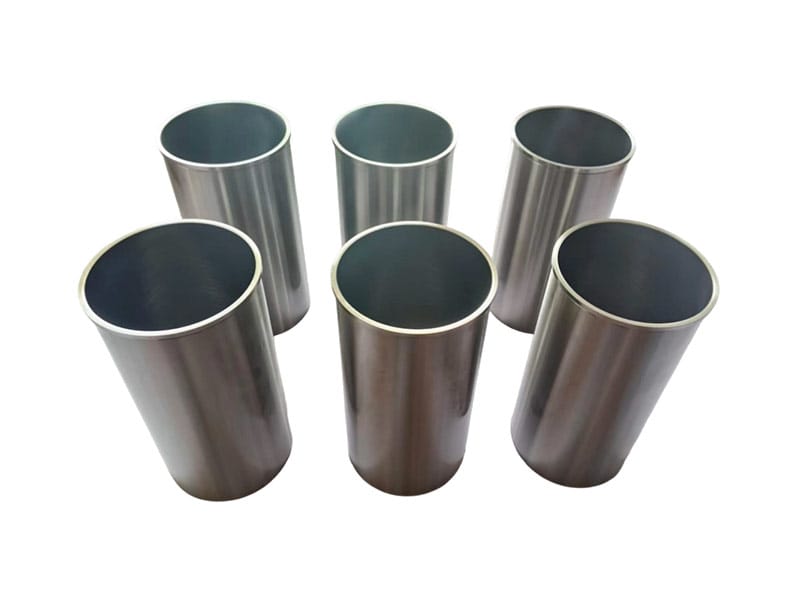
The liner has an interface with the block as well as a running surface for the piston and rings. Our engine cylinder liner guidance calls for the finished bore, outside diameter, length, flange details, liner type and relevant sealing features. Matching only the inside diameter leaves the installation side unresolved.
Confirm whether the application uses a wet or dry liner and which finishing operations, if any, remain. Ask whether the proposed item is supplied with its running bore finished or requires machining under an agreed repair procedure. Do not infer its finishing state from the product photograph.
For piston and liner matching, keep liner-to-block fit, piston-to-liner clearance and liner protrusion on separate lines of the inspection record. These are different characteristics. Approval of one should never be used as the acceptance result for the others.
A diameter measured on a loose liner should also be labeled as such. Ask the workshop which installed condition and measurement procedure govern final acceptance for the particular engine.
Piston and Liner Matching Checklist for Purchase Approval
Use the following checklist to compare a quotation with the workshop’s requirements. It is an approval framework, not a universal dimensional specification.
| Review point | Evidence to request | Reason to hold approval |
|---|---|---|
| Engine identity | Complete engine code, identification plate and applicable part references | The offer relies only on the truck model |
| Piston design | Approved drawing or specification covering crown, height, grooves and pin interface | Only nominal bore or an overall size is supplied |
| Liner configuration | Bore, outside features, flange, liner type and finishing state | Block fit or required machining remains undefined |
| Size designation | Documented meaning of standard, grade or repair-size markings | Letters or numbers are being interpreted without a reference |
| Measured fit | Required measurement conditions, applicable limits and responsible workshop | A loose-part measurement is presented as final assembly approval |
| Supporting components | Ring, pin, retaining hardware and seal references where applicable | Compatibility is inferred from visual similarity |
| Supply scope | Itemized contents, quantities and exclusions | The word “kit” substitutes for a component list |
Give each review point a status: confirmed, pending or not applicable. Attach the supporting document to confirmed items and explain why an item is not applicable. This keeps a quotation awaiting a workshop measurement visibly different from an order approved for dispatch, even when both contain the same proposed part numbers.
For piston and liner matching, a missing answer should remain an open question. Do not turn it into an assumed specification simply to complete the purchase form.
Clarify Standard, Select Fit and Repair Size
Treat “standard,” a selection grade and a repair size as separate descriptions until the applicable documentation establishes their meaning. Ask whether a marking identifies a dimensional group, a production reference or another characteristic. Do not assign a universal increment to a letter or number.
Piston and liner matching also needs the location of any size change. Ask whether a proposed repair liner differs at its outside fit, its finished bore or another feature. The phrase “oversize liner” alone does not identify the piston required.
Record the agreed designation beside the measured requirement and part reference. Where a supplier proposes a superseded number or another selection grade, send the supporting information to the technical reviewer before substitution. Piston and liner matching should not be changed informally between quotation and dispatch.
Include Rings and Pins in the Compatibility Review
Ask which ring set is specified for the piston grooves and the proposed liner surface. Ring-to-groove clearance and ring end gap are separate inspections in the diesel engine block service task list. Neither can be approved simply because a ring fits into a groove by hand.
Material pairing also deserves attention. Research on ring coating and liner material combinations found different friction and wear behavior under different lubrication conditions. Those laboratory findings do not identify a universal replacement coating for every truck engine. Request the approved combination rather than selecting a ring by its coating description alone.
For piston and liner matching, the pin needs a separate review. Our engine piston pin page requests dimensions and compatibility with both the piston and connecting rod, including the retention arrangement. Confirm whether retaining hardware is included and which specification applies.
An accepted piston and liner pair does not automatically validate an old pin, a separately purchased ring set or a different connecting rod.
Decide on Reuse After Inspection Rather Than Before It
Must a piston and liner always be replaced together? The purchasing answer should follow the applicable repair specification and measured condition. Do not approve reuse merely because the engine ran before disassembly, and do not expand the replacement list without understanding what the inspection found.
For piston and liner matching involving retained parts, request a written disposition for each component: accepted for reuse, rejected or awaiting further evaluation. Keep the inspection findings with the proposed replacement reference so the supplier knows what will remain in the assembly.
Also investigate the original damage. Experimental research on contaminants at the ring and liner interface found that solid particles in lubricating oil increased wear and friction under the tested conditions. The practical implication is to resolve relevant contamination concerns, not assume new components eliminate their cause.
Keep diagnosis and purchasing connected, while leaving the technical repair decision with the qualified workshop.
Define What the Quoted Kit Actually Contains
The word “kit” is not an itemized supply agreement. Piston and liner matching can be technically sound while the shipment still lacks a component the workshop expected. Separate the part list from the assembly work and documentation included.
| Quotation description | Clarification required | Receiving check |
|---|---|---|
| Piston only | Confirm whether rings, pin and retaining hardware are excluded | Check the approved reference and piece count |
| Cylinder component set | List every piston, liner, ring, pin and seal supplied, as applicable | Compare individual items with the agreed list |
| Engine quantity | State cylinder coverage and quantities for every component | Do not treat carton count as component count |
| Matched pair or set | Define the matching criterion, identifiers and supporting record | Preserve the documented grouping through assembly |
These descriptions are purchasing examples, not a promise that every configuration is available. Confirm the actual scope for the requested engine before ordering.
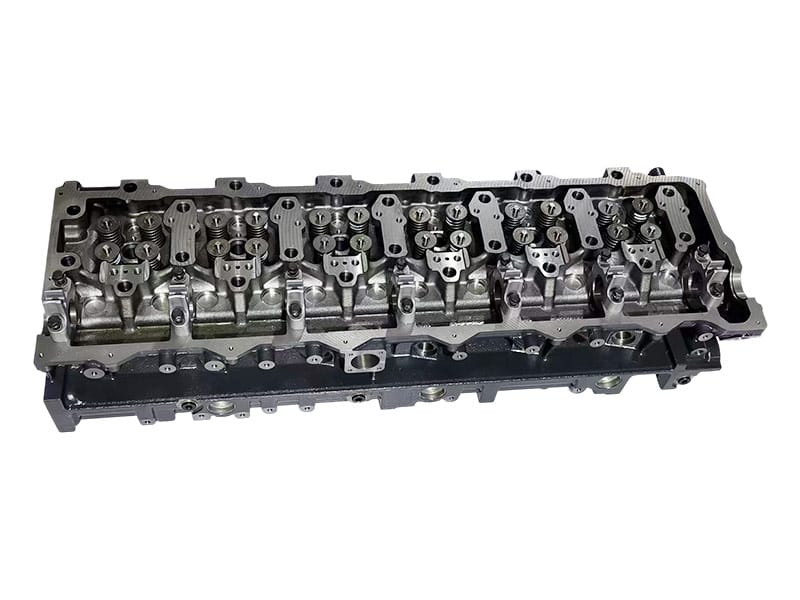
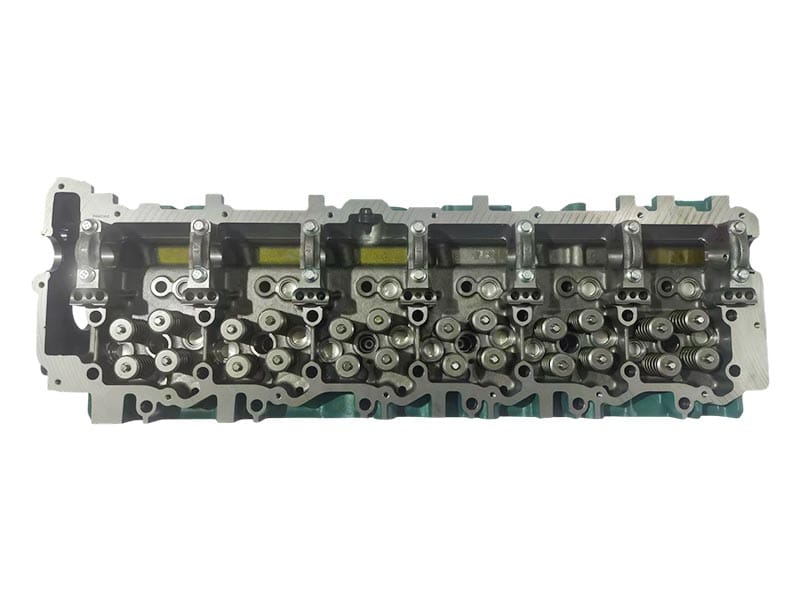
If the rebuild also includes a cylinder head, use the same discipline when reviewing bare and complete cylinder head supply options. Components included in one part of the repair should not be assumed to cover another.
Request Measurements That Answer the Right Question
A useful piston and liner matching record identifies the part, feature measured, measurement location, units, conditions, result and acceptance reference. “Diameter checked” is not enough to establish which diameter was examined or whether the result meets the intended requirement.
Where the specification uses diametral clearance, the calculation is the finished bore diameter minus the piston diameter at the prescribed gauge point. This is not the radial gap on one side. Use measurements taken under the specified conditions, and compare the result with the requirement for that exact application. Piston and liner matching has no universal clearance that can safely be borrowed from another engine.
For a piston, request the specified gauge location rather than choosing an arbitrary point on the crown or skirt. For a liner, ask how the report identifies measurement positions and whether readings apply before or after the required installation and finishing operations.
Measurement traceability guidance explains that traceability alone does not guarantee fitness for purpose; measurement uncertainty must be suitable for the requirement. A calibration label is useful evidence, but it is not the acceptance decision for the part.
Keep component traceability separate from measurement traceability. A batch code identifies production history; it does not, by itself, prove a dimensional result. For piston and liner matching, ask the reviewer to connect the measured result to the actual item or clearly defined sampling scope.
Send an RFQ With a Clear Technical Boundary
A piston and liner matching inquiry works best when verified facts and unresolved questions are separated. Start with engine identity and old component references, then state the repair condition, requested quantities and desired supply scope.
For example, an inquiry can say: “The engine plate and removed-part markings are attached. The workshop has not approved the final liner bore. Please identify the proposed piston and liner references, provide the relevant specification, and confirm separately available supporting components.” This is more useful than guessing a bore size to obtain a fast response.
Attach readable drawings and labeled photographs rather than compressing every dimension into a message thread. Where the machine shop has supplied a report, keep its revision and component identifiers intact.
Compare alternative offers against the same approved requirements. One may include rings while another excludes them; one may identify a finished bore while another leaves finishing to the workshop. For piston and liner matching, these differences belong in the comparison before either offer is accepted, not in a clarification raised after delivery.
Assign a person to close the remaining technical questions. Piston and liner matching should reach written approval before dispatch, while any engine-dependent final checks remain explicitly assigned to the receiving workshop.
Preserve Approved Pairings Through Delivery and Assembly
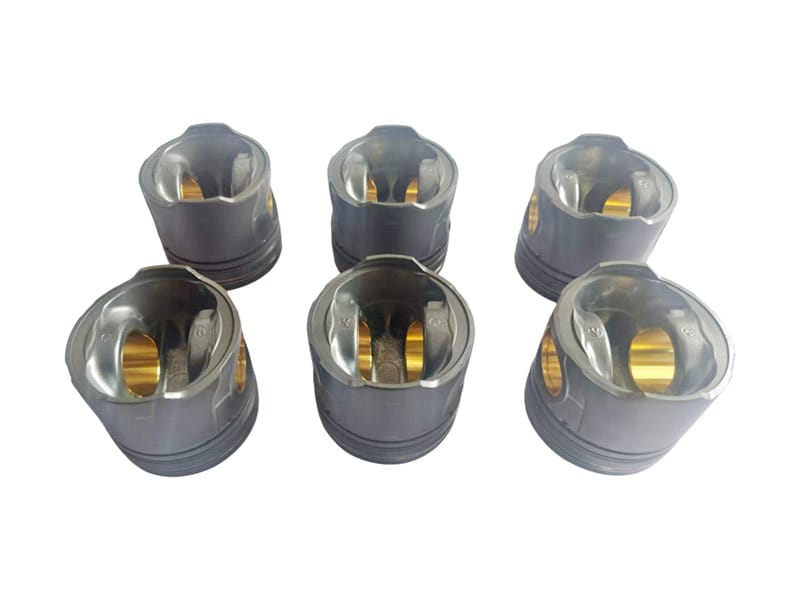
Receiving checks should compare the shipment with the approved references, contents and identification records. Where the order specifies individually matched pairs or grouped components, retain that grouping when unpacking. Do not rearrange them by appearance.
If a part marking, dimension or included item differs from the approved order, separate the affected components and obtain clarification before fitting. Keep packaging labels, photographs and the original approval together so the discrepancy can be reviewed without losing its context.
Piston and liner matching does not replace the workshop’s assembly inspection. The engine machinist training framework distinguishes measurement, inspection, diagnosis and reconditioning as professional skills. Use the applicable engine service information for final acceptance and assembly rather than treating this purchasing guide as an installation procedure.
Conclusion
Reliable piston and liner matching connects engine identity, component design, measured condition and an explicit supply list. Nominal bore and photographs are starting points, not complete approval evidence. Resolve the specification before dispatch and preserve the agreed component identities through workshop acceptance.
For a Cheyu parts inquiry, send your engine code, old-part markings, relevant measurements and required quantities. Include the repair status and components you expect in the shipment so the proposed scope can be reviewed without guessing.
FAQ
Is the Same Bore Size Enough to Match a Piston and Liner?
No. Piston and liner matching also requires the correct application, piston geometry, liner configuration and supporting components. Verify the proposed references and relevant measurements against the applicable specification rather than treating nominal bore as proof of interchangeability.
Can I Use a New Piston With an Existing Liner?
Only after the workshop approves the retained liner and the proposed combination under the applicable repair requirements. Inspection, dimensional condition, surface condition and compatibility must support the decision. This cannot be confirmed from an engine model or photograph alone.
Does a Matched Set Remove the Need for Workshop Checks?
No. Ask what “matched” means and which records support it. Piston and liner matching performed before shipment does not establish the condition of the receiving engine or replace the prescribed checks after installation and any required machining.
Are Piston Rings and Pins Included With Every Piston?
Do not assume they are. Request an itemized supply list with references and quantities. Confirm rings, pins, retaining hardware and liner seals separately where applicable, and identify whether each item is supplied loose, assembled or excluded.
What Should I Send for a Piston and Liner Matching Inquiry?
Provide the engine identification, old-part references, labeled photographs, repair history, relevant workshop measurements and requested quantities. State the required supporting components and identify measurements that remain unconfirmed. Unknown information should stay visible instead of becoming an assumed specification.