Một thực tế cylinder head inspection checklist should be completed before a replacement head is installed. For heavy truck engine repairs, receiving the correct casting is only the first step. The workshop still needs to verify the engine application, head reference, casting marks, machined surfaces, ports, threaded holes, plugs, valve-train configuration, supplied components, visible damage, and any inspection records agreed with the supplier.
Mục đích của a cylinder head inspection checklist is not to replace the engine manufacturer’s service procedure. It is to create a clear receiving and pre-installation record so the workshop can identify problems before assembly begins. This reduces the risk of discovering a wrong interface, missing component, damaged thread, or unresolved inspection point after the engine is already being rebuilt.
Confirm Cylinder Head Identity Before Opening the Repair Sequence
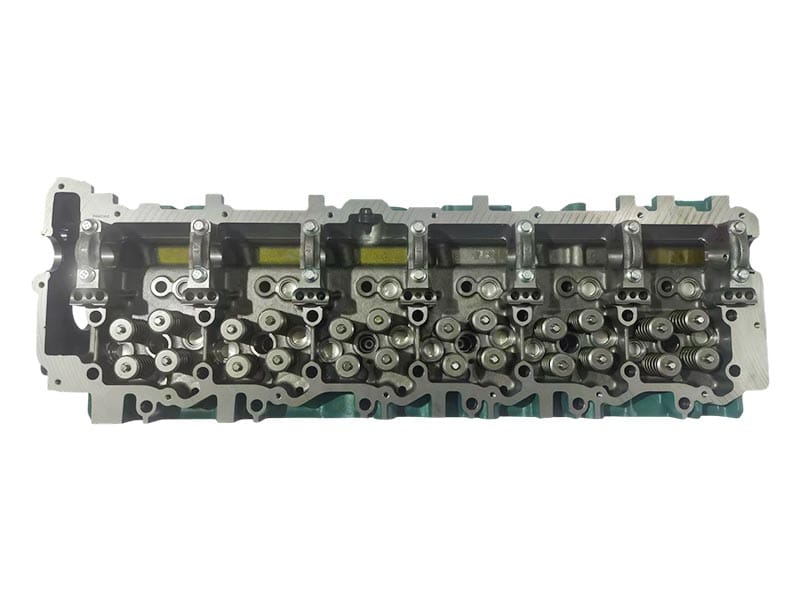
The first item on a cylinder head inspection checklist should be identity. Compare the delivered head with the purchase order, engine code, old-head reference, and product documentation. Record every visible stamped, engraved, cast, or labeled number.
Do not assume that a casting number is always the finished part number. A cast reference can identify a casting family while machining, injector configuration, port arrangement, or fitted components define the final replacement. If several numbers are visible, photograph each one and note where it appears.
Dòng điện danh mục đầu xi lanh động cơ includes several replacement-head listings. Those product families can help narrow the application, but final acceptance should still be based on the complete engine code and the physical head being installed.
Compare the Replacement With the Old Cylinder Head
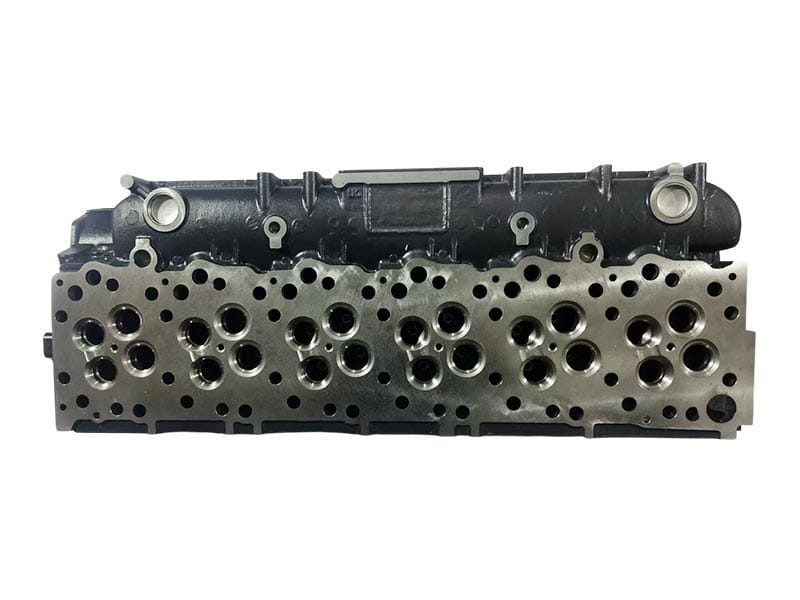
A cylinder head inspection checklist should include a side-by-side comparison with the removed head whenever the old component is available. Compare the combustion face, intake side, exhaust side, front and rear faces, port locations, mounting holes, injector-related features, plugs, and other visible interfaces.
Visual similarity is useful, but do not stop at “looks the same.” Small differences in port layout, sensor bosses, coolant connections, or valve-train features can matter during installation.
The earlier guide on nhận dạng đầu xi lanh explains how engine-plate information, part references, casting marks, and multi-angle photographs can be combined before ordering. The same evidence should be reused when the part arrives.
Inspect Shipping Condition Before Cleaning or Assembly
Before the head enters the workshop process, inspect the packaging and visible condition. Add shipping condition to the cylinder head inspection checklist so transport damage is separated from manufacturing or service issues.
Look for impact marks, damaged corners, broken packaging, corrosion, loose plugs, contamination, and damage to machined surfaces. Photograph the package before it is discarded if there is any concern.
If the head contains fitted valves or other components, check whether anything has shifted or been damaged during transport. Do not install a head simply because the external carton appears undamaged.
Check the Gasket Mating Surface Carefully
The deck or gasket mating surface is one of the most important areas on a cylinder head inspection checklist. Inspect it under good lighting for dents, scratches, corrosion, gouges, handling damage, foreign material, and visible defects around combustion chambers and fluid passages.
Do not use aggressive cleaning methods on a precision sealing face unless they are approved for the material and engine. Some service procedures specifically warn against wire brushing or damaging gasket surfaces.
Flatness should be checked using the engine-specific service method and limit. Public diesel-engine repair standards commonly include inspection of cylinder-head mating surfaces for warpage, but the actual allowable value is not universal. The applicable engine documentation must control the pass/fail decision.
Inspect the Casting for Cracks or Heat Damage
A receiving cylinder head inspection checklist should include visual inspection for cracks, especially in high-stress or high-temperature areas. Depending on the head design, these may include regions between valve seats, around injector features, exhaust ports, combustion-chamber bridges, and coolant passages.
Visible cracks should be documented before any machining or further work. If the head is new or supplied as a tested replacement but a suspicious indication is found, stop the installation and clarify the condition with the supplier.
When visual inspection is insufficient, an appropriate non-destructive testing method may be required. The ASNT overview of liquid penetrant testing explains how surface-breaking discontinuities can be revealed on suitable nonporous materials. The method and acceptance criteria still need to match the head material and applicable repair specification.
Check Coolant and Oil Passages for Obstruction or Damage
Một hoàn chỉnh cylinder head inspection checklist should include coolant and oil passages that are visible and accessible without inappropriate disassembly. Look for casting debris, packing material, corrosion products, damaged plugs, or obvious restrictions.
Do not push unknown debris deeper into a passage. If cleaning is required, use the approved method for the cylinder head and preserve any evidence of abnormal contamination.
Professional diesel-service training standards commonly include inspection of passages, plugs, and galleries during cylinder-head diagnosis. This is useful because a physically correct head can still create problems if a passage is obstructed or a plug is damaged.
Inspect Threaded Holes and Stud Locations
Damaged threads can delay an installation even when the head itself is otherwise correct. Add all critical threaded locations to the cylinder head inspection checklist.
Look for pulled threads, corrosion, impact damage, cross-threading, missing inserts, damaged studs, or foreign material in the holes. Pay particular attention to head-cover, manifold, injector-related, rocker or camshaft-related, lifting, and accessory mounting points relevant to the engine.
Do not test threads by forcing a fastener into an uncertain hole. Use the correct thread information and approved repair method if damage is suspected.
Verify Intake and Exhaust Port Configuration
The intake and exhaust sides can reveal fitment differences that are not obvious from the combustion face. A cylinder head inspection checklist should compare port count, spacing, shape, stud or bolt locations, sensor bosses, and external connection points.
For a heavy truck repair, manifold fitment matters as much as the cylinder-head reference. A head may appear close to the original but still create installation problems if the manifold interface differs.
Use the old head or engine-specific drawing as the comparison reference. If a difference is found, document it before attempting assembly.
Check Injector Related Features
Injector mounting or injector-tube features should be reviewed as part of the cylinder head inspection checklist. Depending on the engine, this can include injector bores, sleeves, tubes, hold-down points, sealing surfaces, electrical pass-throughs, and nearby fuel passages.
Inspect for shipping damage, corrosion, incomplete machining, missing tubes or sleeves where applicable, and differences from the original head.
Do not assume injector hardware is included with every cylinder head. The quotation should identify which injector-related components are fitted and which must be transferred or purchased separately.
Inspect Valve Seats, Guides and Valves if Supplied
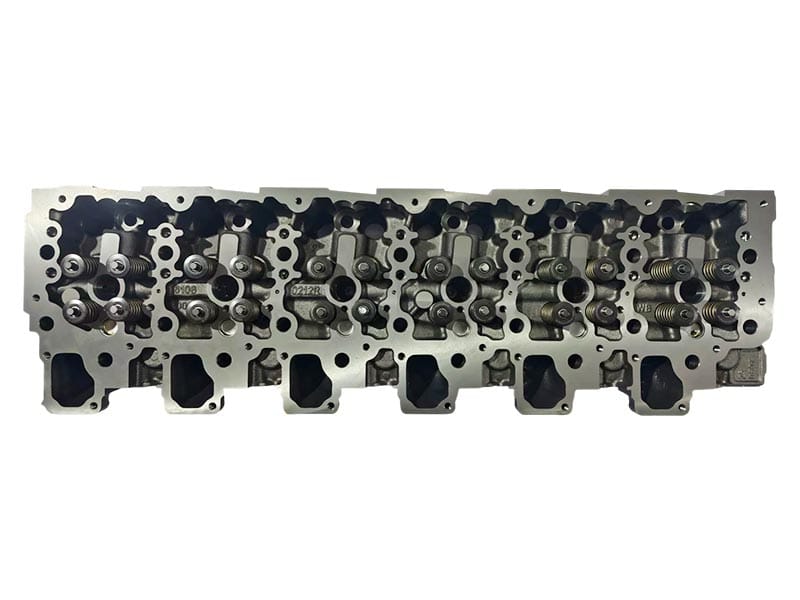
If the replacement head includes valve-train components, the cylinder head inspection checklist should expand beyond the casting. Inspect visible valve faces, seats, stems, guides, springs, retainers, locks, and related parts for damage or obvious assembly issues.
Professional diesel training standards commonly include examination of valves, guides, seats, springs, retainers, seals, rocker components, and related passages during cylinder-head service. The specific dimensions and acceptance limits, however, remain engine-specific.
If the head is supplied bare, record that condition so the workshop does not assume valve-train components are missing from the shipment when they were never included in the order.
Confirm Whether the Head Is Bare or Fitted
Supply scope deserves a separate line on the cylinder head inspection checklist. A product image may show valves, springs, plugs, or other parts, but the written quotation should define what belongs to the shipment.
Hướng dẫn trên đầu xi lanh trần và hoàn chỉnh explains why buyers should compare an itemized component list rather than assume that “complete” has one universal meaning.
| Thành phần | Expected? | Received? | Action |
|---|---|---|---|
| Cylinder head casting | Xác nhận | Có /Không | Match reference |
| Valves | Xác nhận | Có /Không | Inspect if supplied |
| Valve springs and retainers | Xác nhận | Có /Không | Inspect if supplied |
| Guides and seats | Xác nhận | Có /Không | Verify fitted condition |
| Injector tubes or sleeves | Xác nhận | Có /Không | Check configuration |
| Plugs | Xác nhận | Có /Không | Inspect seating and condition |
| Cam or rocker-related components | Xác nhận | Có /Không | Match quotation |
Check Flatness Only With the Correct Procedure
Flatness is an important item in a cylinder head inspection checklist, but it is also an area where generic advice can create problems. The measuring tool, reference points, temperature, and service limit must match the applicable engine procedure.
A straightedge and feeler gauge may be used in some service manuals, while other procedures can require different equipment or additional dimensional checks. Do not take one limit from an unrelated engine and apply it to another head.
If the head has already been resurfaced, record its overall height or other required post-machining dimensions where the engine specification calls for them. Previous machining can affect whether further resurfacing is permitted.
Review Pressure Test or Leak Test Evidence Where Required
If the purchase specification requires pressure testing or another leak test, include the record in the cylinder head inspection checklist. Do not accept a vague “pressure tested” statement without knowing what was tested and how the result is identified to the supplied head.
Some heavy-duty diesel service procedures specifically include pressure testing as part of cylinder-head inspection. The exact test pressure, temperature, fixture, and acceptance criteria are engine- and procedure-specific and should not be generalized.
If the head is supplied without a test record and the workshop requires one, resolve that requirement before installation rather than assuming it was performed.
Verify Plugs, Inserts and Small Fitted Components
Small fitted items can cause major delays. A detailed cylinder head inspection checklist should therefore include gallery plugs, core plugs, threaded inserts, dowels, sleeves, and any other fitted components required for the specific head.
Check that each required item is present, seated correctly, and undamaged. Compare the locations with the old head or service documentation.
If a plug or insert has been removed for cleaning or testing, confirm the approved replacement procedure before assembly.
Inspect Lifting and Handling Areas
Heavy cylinder heads are often moved with lifting equipment. Check lifting eyes, threaded lifting points, or designated handling areas for damage before the head is moved repeatedly around the workshop.
Các cylinder head inspection checklist should also confirm that lifting is performed using the appropriate equipment and designated points. Do not lift from a manifold stud, injector feature, or other attachment point not intended to support the component.
This is both a component-protection issue and a workshop-safety issue.
Compare Supplied Documentation With the Physical Head
Paperwork should match the part in front of you. The cylinder head inspection checklist should connect the product reference, batch or traceability information, inspection records, packing list, and other supplied documents to the actual head.
A quality certificate or general company document does not prove that the physical head is the correct engine version. Likewise, a correct head reference does not automatically prove that every requested inspection document is present.
Keep identity, fitment, quality evidence, and supply scope as separate review items.
Build a Receiving Inspection Record
A written cylinder head inspection checklist makes the receiving process easier to audit and easier to discuss with the supplier if a problem appears.
| Mục kiểm tra | Ghi lại những gì | Trạng thái |
|---|---|---|
| Ứng dụng động cơ | Complete engine code and buyer reference | Matched / Open |
| Head identity | Part number, casting marks, photos | Matched / Open |
| Shipping condition | Packaging and impact photos | Accept / Review |
| Deck surface | Visible condition and required measurement | Accept / Review |
| Crack inspection | Visual or specified NDT record | Accept / Review |
| Ports and passages | Configuration and obstruction check | Accept / Review |
| Threads and plugs | Condition and completeness | Accept / Review |
| Phạm vi cung cấp | Included components versus quotation | Complete / Missing |
| Tài liệu | Inspection, packing and traceability records | Complete / Open |
Stop Installation When a Critical Difference Is Found
A cylinder head inspection checklist only adds value if the workshop acts on it. If the head reference, port layout, gasket face, injector configuration, threaded holes, or other critical interface does not match, stop the installation and investigate.
Do not modify a new head simply to make it resemble the old one unless the change is explicitly approved for that engine and component. Unauthorized drilling, grinding, machining, or plugging can create a part that no longer meets its intended specification.
Document the difference with photographs and measurements, then send the evidence back to the supplier for review.
Use the Checklist Before Gaskets and Fasteners Are Committed
Complete the cylinder head inspection checklist before opening or committing installation-specific consumables where practical. This avoids unnecessary waste if the head must be returned or exchanged.
Before assembly, confirm the correct gasket specification, fastener requirements, tightening procedure, surface preparation, and any one-time-use components from the engine service documentation.
Do not publish or follow universal head-bolt torque values. Tightening sequence, torque, angle, fastener type, and reuse rules vary by engine.
Record the Inspection Before the Engine Returns to Service
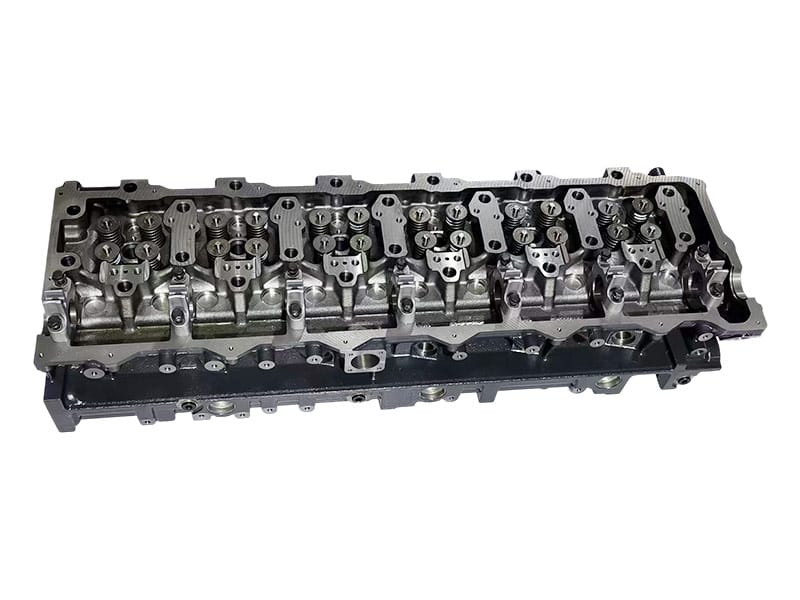
After the head is accepted, keep the completed cylinder head inspection checklist with the repair record. Save identification photos, inspection findings, supplier documents, and any approved deviations.
This record becomes useful if the engine later develops a leak, compression issue, or other problem. The workshop can confirm which head was installed, what was inspected before assembly, and which documents accompanied the part.
For fleets and distributors, consistent inspection records also make repeat purchasing easier because the approved configuration can be compared with future shipments.
What to Send When a Replacement Head Fails Receiving Inspection
Nếu các cylinder head inspection checklist identifies a problem before installation, send the supplier the engine code, head reference, package label, clear photographs, a description of the mismatch or damage, and the purchase-order line.
If the issue is fitment, include comparison photos of the old head. If the issue is damage, include packaging photos. If the issue involves a measurement, identify the measuring points and method.
You can use the trang liên h to send the engine code, head reference, photographs, required components, and quantity for a matching review.
Kết luận
Một đáng tin cậy cylinder head inspection checklist connects receiving inspection with engine fitment and workshop installation. It confirms the head identity, compares the replacement with the old component, checks shipping condition, sealing surfaces, cracks, ports, threads, plugs, valve-train configuration, and supplied components, and records any agreed inspection evidence.
The checklist should not replace engine-specific service data. Flatness limits, pressure-test conditions, valve dimensions, tightening procedures, machining allowances, and crack-acceptance rules must come from the correct technical documentation. Used properly, the checklist helps the workshop catch the wrong part or an unresolved condition before the engine is assembled.
Câu hỏi thường gặp
What should a cylinder head inspection checklist include?
A cylinder head inspection checklist should include engine application, head reference, casting marks, shipping condition, gasket surface, crack inspection, intake and exhaust interfaces, injector-related features, threads, plugs, supplied components, and required inspection records.
Should a new replacement cylinder head be inspected before installation?
Yes. Even a new replacement should be checked for correct identity, shipping damage, interface differences, missing components, documentation, and any inspection requirements specified in the purchase order.
How do I check cylinder head flatness?
Use the measuring method and limit specified for the exact engine. Some service procedures use a precision straightedge and feeler gauge, while others may require additional measurements. Do not apply a generic flatness limit from another engine.
Does a pressure tested cylinder head still need visual inspection?
Yes. Pressure testing addresses specific leakage concerns but does not replace checking identity, shipping damage, machined surfaces, threaded holes, ports, plugs, and supply scope.
What should I do if the replacement head does not match the old head?
Stop installation. Record the engine code, both head references, casting marks, and clear comparison photos. Use the cylinder head inspection checklist to identify the exact difference and request a fitment review before modifying or installing the part.