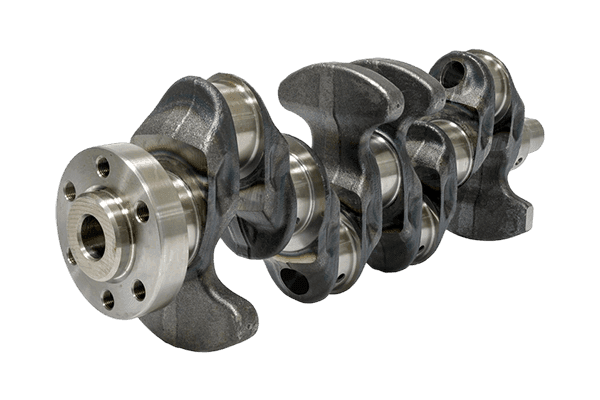
The decision between crankshaft repair vs replacement should be made from inspection evidence, not from one scratched journal or one general rule. A crankshaft with visible journal damage may still have an approved repair path if its dimensions, straightness, critical radii, and material condition remain within the limits for that engine. Another shaft may look repairable at first glance but have cracking, excessive previous grinding, heat damage, distorted geometry, or interface damage that makes replacement the safer option.
For heavy truck engine rebuilds, the useful question is not simply whether a crankshaft can be machined. The workshop needs to know whether the proposed repair is allowed for the exact engine, whether the remaining geometry will match available bearings, and whether the rest of the shaft remains serviceable. This guide explains how to evaluate crankshaft repair vs replacement without using generic grinding limits or one-size-fits-all acceptance values.
Start Crankshaft Repair vs Replacement With a Full Inspection
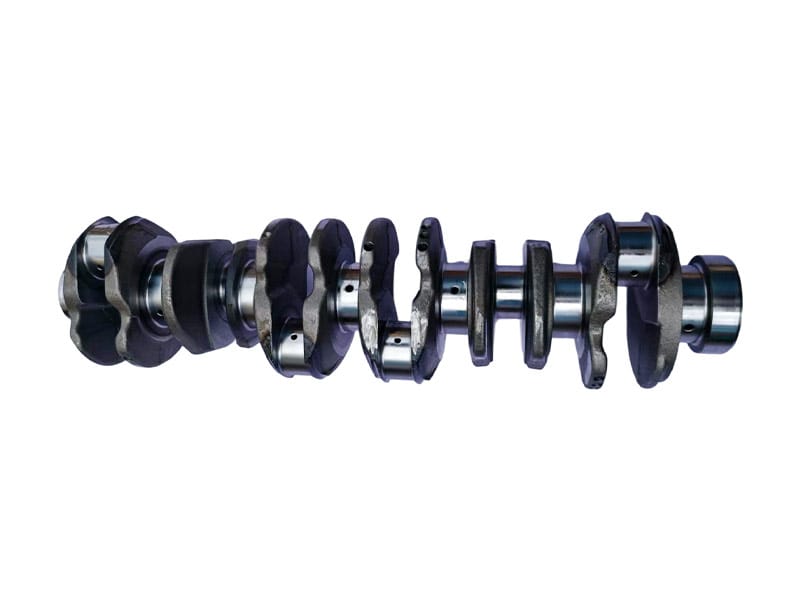
The first step in crankshaft repair vs replacement is to document the shaft before machining changes the evidence. Record the engine code, crankshaft reference, journal condition, bearing condition, front and rear interfaces, oil-hole areas, fillets, and any visible heat or impact damage.
A journal that has transferred bearing material may look worse before cleaning than it does afterward. The opposite can also happen: once deposits are removed, deep scoring, cracks, or damaged oil-hole edges may become more obvious.
Mai devreme ghid de inspecție a arborelui cotit explains how to create a baseline record before a rebuild decision. That record should be completed before the workshop commits to grinding or orders a replacement shaft.
Journal Damage Does Not Automatically Mean Replacement
One reason crankshaft repair vs replacement requires measurement is that journal damage varies widely. Light surface wear, minor scoring, or dimensional wear may be repairable under an approved machining process. Severe seizure, deep scoring, cracking, excessive heat damage, or loss of critical geometry can create a different decision.
Authoritative repair guidance generally treats journal regrinding as acceptable only when it is performed within the manufacturer’s instructions and service limits. It also warns that poor grinding can damage journal radii, surface finish, or hardened layers.
The important point is that “damaged” and “unrepairable” are not synonyms. The workshop should identify the exact defect and compare it with an approved repair path.
Measure Main Journals Before Choosing a Repair Path
Main-journal dimensions are central to crankshaft repair vs replacement. Measure each journal at the required axial positions and orientations so diameter, taper, and out-of-round can be evaluated.
A single diameter reading does not show whether the journal is tapered or oval. The measurement record should preserve the actual values instead of reducing everything to one average number.
Do not apply a generic undersize limit. Different engines have different available repair sizes and bearing options. Some engines may permit one or more approved undersizes, while others may have more limited service options. The engine-specific documentation must define what is allowed.
Check Connecting Rod Journals Separately
The crankpin or connecting-rod journals can have a different wear pattern from the main journals, so they need their own evaluation. A crankshaft repair vs replacement decision should not assume that all journals are in the same condition.
Measure each crankpin for diameter, taper, and out-of-round using the specified method. Record which bearing position showed damage and compare it with the corresponding crankpin.
If one crankpin requires substantial material removal while the others do not, the machine shop and workshop should confirm whether the final shaft can still use an approved bearing arrangement and remain within the engine’s service specification.
Review the Crankshaft’s Previous Grinding History
A shaft that has already been reground changes the crankshaft repair vs replacement calculation. The workshop needs to know how much material has already been removed and whether another approved repair size is available.
Previous repair history can be found in old invoices, bearing markings, workshop records, or direct journal measurement. Do not assume that an old shaft is still standard size.
If the shaft is already at the final approved repair size, further grinding may not be allowed even when the new damage looks shallow. In that situation, replacement may become the practical path.
Inspect Journal Fillets Before Approving Grinding
Fillet geometry matters because crankshaft stresses concentrate near the transition between the journal and crank web. A correct crankshaft repair vs replacement decision therefore has to consider more than journal diameter.
Improper grinding can alter the fillet radius, leave tool marks, or create an unfavorable transition. Visible damage, cracks, or previous machining in the fillet area should be documented carefully.
If the applicable repair procedure specifies a particular radius or grinding method, the machine shop should be capable of reproducing it. A journal that can technically be made smaller is not automatically repairable if the critical geometry cannot be restored correctly.
Inspect Oil Holes and Their Edges
Oil holes and their edges are another important part of crankshaft repair vs replacement. Journal damage near an oil hole may involve burrs, cracking, blocked passages, or edge damage that requires additional inspection.
After a bearing failure, internal oil drillings may also contain debris. Cleaning the journal surface without clearing the oil passages can leave contamination inside the rebuilt engine.
Where the repair procedure allows chamfering or finishing of oil-hole edges, follow the approved specification. Do not improvise the shape or depth simply to remove visible damage.
Use Crack Inspection When the Failure History Requires It
Cracking can change a crankshaft repair vs replacement decision immediately because a surface that can be reground dimensionally may still be structurally unacceptable.
Magnetic particle examination is one method used for ferromagnetic crankshafts under appropriate procedures. ASTM maintains specifications for magnetic particle examination of certain crankshaft forgings, including separate treatment of critical inspection regions and acceptance criteria. The ASTM A986/A986M crankshaft examination specification illustrates why crankpin journals, main journals, oil holes, and fillet regions are treated as distinct inspection zones.
That standard is not a universal repair rule for every truck crankshaft. The correct testing procedure and acceptance criteria must match the shaft material, engine, and repair specification.
Check Straightness and Runout
A crankshaft can have journals that are machinable while the shaft itself has unacceptable bending or runout. That is why crankshaft repair vs replacement should include a straightness or runout check whenever the engine procedure or failure history calls for it.
Severe bearing seizure, overheating, impact, or major engine failure can justify additional alignment checks. The measuring setup, support points, indicator position, and service limit should all follow the applicable procedure.
Do not use one universal runout number. A value that is acceptable for one crankshaft may not apply to another design.
Heat Damage Can Change the Decision
Heat discoloration around a journal can indicate a severe bearing failure, but the visible color alone does not determine crankshaft repair vs replacement. The workshop should assess the extent of heat exposure, material condition, journal damage, and any related cracking.
In some crankshafts, surface hardening or nitriding contributes to journal durability. Excessive grinding or overheating can affect this surface condition. Repair guidance specifically warns that poor machining can remove hardened journal surfaces.
If the repair process would remove a critical treated layer or if the material condition is uncertain after severe overheating, the shaft should receive the technical review required by the applicable repair specification.
Surface Finish After Grinding Matters
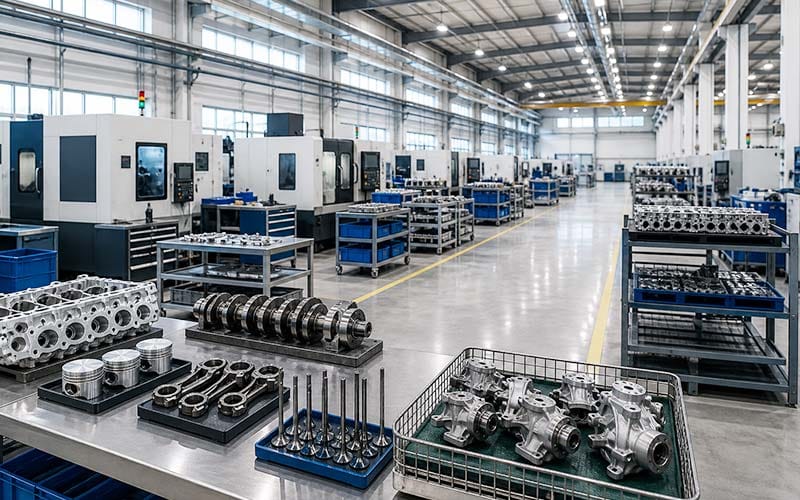
A repaired journal needs more than the correct diameter. Surface finish and geometry also affect bearing performance. This is an important part of crankshaft repair vs replacement because a poorly finished repaired shaft can create a new bearing problem.
Grinding marks, chatter, incorrect polish direction, damaged radii, or rough oil-hole edges should not be accepted simply because the micrometer reading is correct.
The machine shop should produce the surface condition specified for the engine or approved repair process. The workshop should request a final dimensional and surface-condition record when the repair is critical to the rebuild.
Compare Repair Feasibility With Available Bearings
The availability of correct bearings is part of the crankshaft repair vs replacement decision. A crankshaft may be machinable to a smaller diameter, but that does not help if the engine has no approved bearing set for the resulting size.
Before grinding, confirm the allowable repair sizes and corresponding main and connecting-rod bearing availability. Do not machine the shaft first and search for bearings afterward.
If the replacement crankshaft is supplied at standard size, remember that bearings selected for the damaged undersize shaft may no longer be correct. The crankshaft and bearing order should be approved together.
Review Front and Rear Interface Damage
Journal condition often dominates the discussion, but crankshaft repair vs replacement should also include the crankshaft nose and rear flange.
Inspect keyways, threads, gear seats, pulley or damper interfaces, flywheel mounting areas, pilot features, and seal running surfaces. Damage in these areas can make a shaft impractical to reuse even when the journals can be repaired.
Some interface repairs may be approved for a particular engine or shaft, while others are not. The repair decision should use the applicable specification rather than a generic machining assumption.
Look at the Cause of Journal Damage Before Reusing the Shaft
Un bun crankshaft repair vs replacement process also asks why the journal was damaged. If the cause is not corrected, a repaired or replacement shaft can fail again.
Possible contributing conditions include oil starvation, contaminated lubricant, blocked oil passages, incorrect bearing clearance, housing misalignment, connecting-rod problems, bearing installation error, or debris from another engine failure.
Mai devreme low oil pressure guide explains why a lubrication symptom should be investigated before a new oil pump is automatically blamed or ordered.
Crankshaft Repair vs Replacement Decision Table
The following table provides a structured way to discuss crankshaft repair vs replacement. It is not a universal pass/fail specification.
| Inspection Finding | Repair May Remain Possible When | Replacement Becomes More Likely When |
|---|---|---|
| Journal wear | An approved repair size and matching bearing exist | Wear exceeds the final approved repair path |
| Punctaj | Damage can be removed within approved machining limits | Damage is too deep for the allowed repair size |
| Taper / out-of-round | Machining can restore geometry within approved limits | Required removal exceeds approved limits |
| Crack indications | Only if the applicable specification explicitly permits the condition | Crack location or severity fails acceptance criteria |
| Runout / bending | An approved corrective process exists | Shaft remains outside permitted straightness limits |
| Fillet damage | Correct geometry can be restored under the approved process | Critical radius or structure cannot be restored safely |
| Previous grinding | A further approved repair size is available | No additional approved repair size remains |
Compare the Total Repair Scope, Not Just the Machine Operation
The commercial side of crankshaft repair vs replacement should compare the full rebuild impact rather than only the grinding operation. Repair may require crack testing, straightness checks, grinding, polishing, cleaning, final measurement, and new undersize bearings.
Replacement requires accurate matching of the new shaft, bearing selection, and inspection of the supplied component. It may reduce machining steps but still requires careful fitment confirmation.
Do not reduce the decision to purchase price alone. Workshop time, available machining capability, risk of repeat work, approved bearing sizes, and confidence in the final specification all matter.
When Repair Is Usually the More Logical Path
Într-o crankshaft repair vs replacement evaluation, repair becomes more reasonable when the damage is limited to machinable journal wear or scoring, the shaft is otherwise sound, no unacceptable crack indications are present, straightness is within the approved path, and a valid repair size with matching bearings is available.
The machine shop should also be capable of preserving journal radii, surface finish, oil-hole geometry, and any required hardened condition.
Even then, the final decision should be documented against the exact engine specification rather than assumed from general experience.
When Replacement Is Usually the More Logical Path
Replacement becomes more attractive in crankshaft repair vs replacement when the shaft has reached its final approved repair size, shows unacceptable cracking, has severe heat damage, cannot meet straightness requirements, has heavily damaged fillets or interfaces, or would require unapproved machining.
Replacement may also be more practical when the repair process cannot be verified or when the required bearings and technical support for another repair size are unavailable.
The replacement crankshaft still needs the same attention to engine code, journal specification, stroke, and front and rear interfaces as any other internal engine component.
Create a Repair Approval Record
If repair is selected, the crankshaft repair vs replacement decision should be documented before machining begins.
| Repair Record Item | Information to Capture |
|---|---|
| Identitatea motorului | Engine code and crankshaft reference |
| Original dimensions | Main and rod journal measurements |
| Damage condition | Scoring, heat marks, fillet or oil-hole findings |
| NDT results | Method, date and relevant indications |
| Runout / straightness | Measured result and setup |
| Approved repair size | Target journal specification |
| Bearing selection | Matching bearing size and reference |
| Final inspection | Post-machining dimensions and condition |
Create a Replacement Matching Record
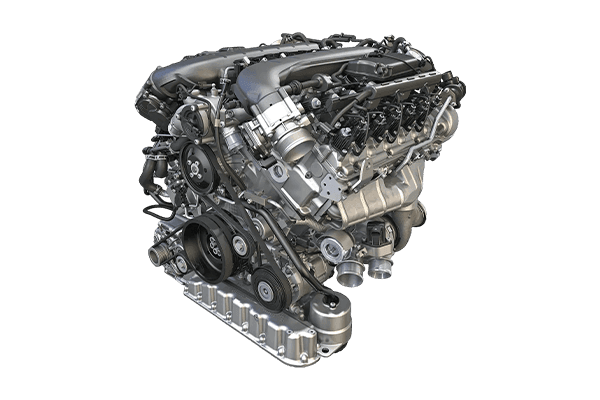
If replacement is selected, convert the inspection evidence into a purchasing record. The crankshaft repair vs replacement decision should not end with “buy new crankshaft.”
Record the complete engine code, old crankshaft reference, main and rod journal specification, stroke, front and rear interfaces, required quantity, and related bearing requirements.
The ghid RFQ arbore cotit provides a structured list of the information that should accompany a replacement request.
Inspect the Replacement Crankshaft Before Installation
Choosing replacement does not remove the need for inspection. As part of the crankshaft repair vs replacement workflow, the new shaft should be checked against the purchase order before the engine is assembled.
Confirm identification, journal configuration, visible condition, front and rear interfaces, oil holes, and any inspection documentation specified in the order. If dimensional verification is required, record it before the shaft is installed.
Do not assume that a new component is automatically the correct application simply because it arrived under the expected engine-family description.
What to Send for a Crankshaft Matching Review
If the final crankshaft repair vs replacement decision is replacement, send the complete engine code, crankshaft reference, journal information, known repair history, stroke where confirmed, front and rear interface photos, inspection findings, required quantity, and bearing requirements.
Curentul engine crankshaft page specifically advises buyers to confirm journal sizes, stroke, and connection ends rather than relying on overall dimensions alone.
You can send the engine code, part reference, interface photos, and relevant inspection findings through the contact pagină pentru o revizuire potrivită.
Concluzie
Crankshaft repair vs replacement should be decided from the complete condition of the shaft and the approved repair limits for the engine. Journal wear or scoring may still allow a controlled repair when an approved undersize and matching bearings are available. Cracking, severe heat damage, excessive previous grinding, unacceptable runout, damaged fillets, or unrepairable interfaces can shift the decision toward replacement.
The strongest decision is documented before machining or purchasing begins. Measure the journals, inspect critical regions, confirm repair history, check straightness, review available bearing sizes, and investigate the cause of the original damage. That process gives the workshop a better chance of rebuilding the engine around a crankshaft that is both dimensionally correct and appropriate for the repair.
FAQ
Can a scored crankshaft journal be repaired?
It may be repairable if the damage can be removed within an approved repair size and the rest of the shaft remains acceptable. The exact machining allowance and bearing size must come from the applicable engine specification.
When should a crankshaft be replaced instead of reground?
Replacement becomes more likely when the shaft has unacceptable cracks, severe heat damage, excessive bending or runout, damage beyond the final approved repair size, critical fillet damage, or no approved bearing size for further machining.
Does crankshaft grinding weaken the shaft?
Approved regrinding can be part of a legitimate repair process, but incorrect machining can damage journal radii, surface finish, oil-hole geometry, or hardened surface condition. The work should follow the applicable crankshaft repair specification.
Should magnetic particle inspection be used before crankshaft repair?
It may be required for suitable ferromagnetic crankshafts depending on the failure history, material, and repair procedure. The inspection method and acceptance criteria should match the applicable specification rather than a universal rule.
Ce informații sunt necesare atunci când comandați un arbore cotit de schimb?
Send the complete engine code, crankshaft reference, main and rod journal information, known repair size, stroke, front and rear interface photos, inspection findings, quantity, and bearing requirements. A documented crankshaft repair vs replacement review should provide most of this information.