Cracked cylinder head symptoms can look very similar to a failed head gasket, a cooling-system leak, an injector problem, or another internal engine fault. Coolant loss, white exhaust vapor, repeated overheating, rough running, pressure in the cooling system, and oil contamination may all raise concern, but none of these signs proves by itself that the cylinder head casting is cracked.
For heavy truck engine repairs, the useful approach is to separate symptoms from confirmation. Record what the engine is doing, verify the cooling and combustion evidence, inspect the head after removal when necessary, and then decide whether the problem is a crack, a sealing issue, distortion, or another fault. This guide explains how to interpret cracked cylinder head symptoms without turning a warning sign into a premature diagnosis.
Why Cracked Cylinder Head Symptoms Are Easy to Misdiagnose
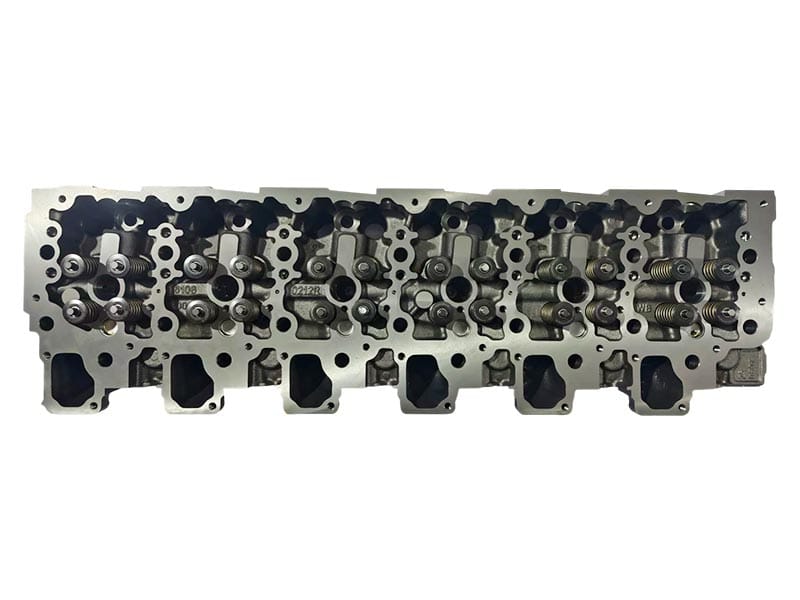
A cylinder head operates at the boundary between combustion pressure, coolant flow, lubricating oil, valve operation, and the head gasket. A defect in several different areas can therefore create similar engine behavior.
For example, unexplained coolant loss may come from an external hose or radiator leak, a failed gasket, an internal cooler, a cracked head, or another part of the cooling circuit. White vapor may be related to coolant entering a cylinder, but combustion or fuel-system problems can also change exhaust appearance. Repeated overheating can damage a head, yet overheating can also begin somewhere else and later create head or gasket damage.
This overlap is why cracked cylinder head symptoms should be treated as a diagnostic starting point. The workshop should build evidence step by step instead of replacing the head solely because several common symptoms appear together.
Unexplained Coolant Loss Is an Important Warning Sign
Coolant that repeatedly drops with no obvious external leak is one of the more important cracked cylinder head symptoms. If coolant enters a combustion chamber, oil passage, or another internal path, the reservoir level may fall even though the ground under the truck remains dry.
Before blaming the head, inspect the complete cooling system. Look for hose leaks, radiator seepage, water-pump leakage, damaged connections, heater or auxiliary circuits, and other external sources relevant to the vehicle. A hot leak can evaporate before leaving a large puddle.
Record how quickly coolant is being lost and under what operating conditions. A gradual level change over many operating hours is different from a sudden large loss after an overheating event. That history helps place the other cracked cylinder head symptoms into context.
White Exhaust Vapor Can Suggest Internal Coolant Entry
Persistent white exhaust vapor after the engine is fully warm may raise concern about coolant entering a combustion chamber. In a diesel engine, however, white exhaust can also occur when fuel does not burn correctly, especially during cold operation or when an injector-related problem is present.
When white exhaust appears together with coolant loss, the combination deserves closer investigation. Check whether the symptom is continuous, limited to cold start, isolated to one cylinder, or associated with rough running. The pattern can help determine the next test.
Do not identify a cracked head only from exhaust color. Cracked cylinder head symptoms become meaningful when several independent findings point toward an internal coolant or combustion leak.
Repeated Overheating Is Both a Symptom and a Possible Cause
Overheating is one of the most confusing cracked cylinder head symptoms because it can appear on either side of the failure sequence. A crack that allows combustion pressure into the cooling system can contribute to overheating. At the same time, an engine that overheats because of a radiator, thermostat, coolant-flow, fan, or other cooling-system problem can expose the cylinder head to severe thermal stress.
Ask what happened first. Did the engine begin losing coolant before temperature problems appeared? Did a cooling-system component fail first? Was the engine operated after a temperature warning? Did the truck overheat suddenly or repeatedly over time?
A repair should address the original cooling-system problem as well as the damaged engine component. Installing a replacement head without correcting the condition that caused severe overheating can expose the new part to the same stress.
Cooling System Pressure and Bubbles Need Careful Interpretation
Rapid pressure rise in the cooling system, repeated bubbling in the expansion tank, or coolant being pushed out can be associated with combustion gas entering the coolant circuit. These are important cracked cylinder head symptoms, but the leakage path may also involve the head gasket or another sealing surface.
Observe the symptom under controlled conditions and follow the applicable workshop procedure. Do not open a pressurized hot cooling system. Record when pressure develops, whether the symptom changes with load, and whether there is other evidence such as coolant loss or a cylinder-specific misfire.
A combustion-gas check or other suitable test can support the investigation, but it usually identifies that combustion gas is reaching the cooling system rather than proving exactly which component contains the leak.
Oil and Coolant Contamination Can Point to an Internal Leak
Coolant in the oil or oil in the coolant may appear among cracked cylinder head symptoms. Milky residue, rising oil level, unusual fluid color, or contamination in the cooling system should be documented promptly.
However, the head is not the only possible path between these systems. Depending on engine design, a gasket failure, internal cooler problem, cracked block, or other fault may create similar contamination.
Take fluid samples or photographs before draining if the evidence is important to the diagnosis. Heavy contamination can also damage bearings and other lubricated components, so the repair scope may extend beyond the cylinder head.
Compression Loss and Rough Running Need Cylinder Level Evidence
A cracked head can affect compression if the defect reaches a combustion chamber, valve area, or sealing region. Hard starting, rough running, reduced power, or a cylinder imbalance can therefore accompany other cracked cylinder head symptoms.
These symptoms are not specific enough to diagnose the head. Valve leakage, piston and ring wear, injector problems, head-gasket leakage, and other faults can produce similar behavior.
Where appropriate, cylinder-level testing can help identify which cylinder deserves further inspection. The workshop should compare the results with engine-specific service information instead of applying one universal compression threshold across different engine families.
External Coolant Seepage From the Head Area Should Be Traced Carefully
Visible coolant near the cylinder head may seem like obvious proof, but external cracked cylinder head symptoms still need source tracing. Coolant can travel along surfaces and appear below the actual leak point.
Clean the area enough to identify fresh leakage and inspect nearby hoses, plugs, fittings, gasket joints, and casting surfaces. If a crack is visible in the casting, photograph its location before further disassembly or cleaning.
Do not confuse a casting line, surface mark, or dirt track with a confirmed crack. Suspected defects should be evaluated with an appropriate inspection method when visual examination is not conclusive.
Cracked Cylinder Head Symptoms Versus Head Gasket Failure
The overlap between a cracked head and a failed head gasket is one of the main reasons diagnosis becomes difficult. Both can create coolant loss, combustion gas in the cooling system, compression problems, overheating, white exhaust, or fluid contamination.
| Observed Symptom | Could Be a Cracked Head | Could Be a Head Gasket or Other Fault |
|---|---|---|
| Unexplained coolant loss | Yes | Yes |
| White exhaust vapor | Yes | Yes |
| Cooling-system pressure | Yes | Yes |
| Oil/coolant contamination | Yes | Yes |
| Low compression | Yes | Yes |
| Visible crack after cleaning/testing | Strong direct evidence | Does not describe gasket condition |
The practical lesson is simple: cracked cylinder head symptoms can justify deeper testing, but confirmation normally requires evidence that locates the defect in the head itself.
Record the Engine History Before Removing the Head
Before teardown, write down the operating history connected to the cracked cylinder head symptoms. Note overheating events, coolant additions, warning lights, hard-start complaints, previous head-gasket work, cylinder-head repairs, injector work, and recent cooling-system service.
This information can help explain why the failure developed and can identify conditions that must be corrected before a replacement is installed. An engine with repeated overheating after a radiator problem presents a different investigation from an engine that suddenly loses coolant with no prior temperature issue.
Keep the full engine code and identification plate with the repair record. If replacement becomes necessary, the same information will be needed for accurate parts matching.
When several cracked cylinder head symptoms appear together, testing should be used to narrow the leak path before the casting is blamed.
Pressure Testing Can Help Locate Leakage
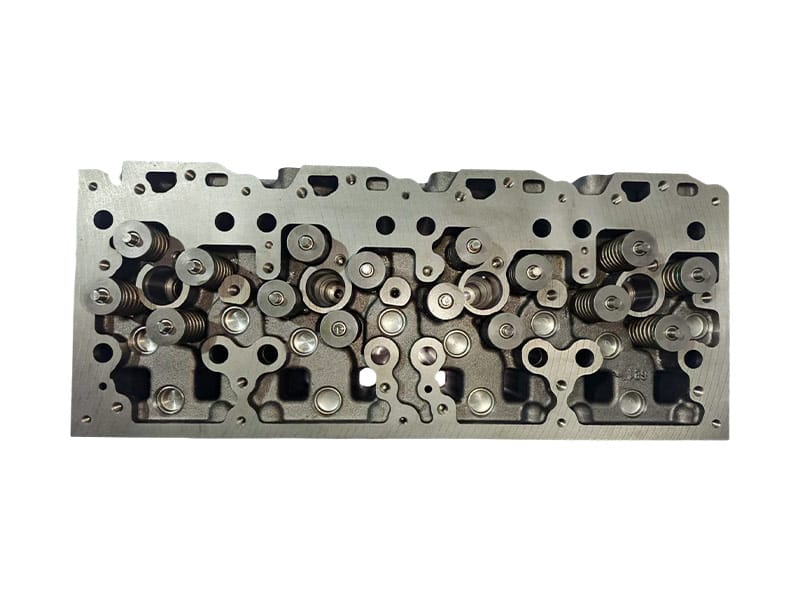
Cooling-system pressure testing and cylinder-head pressure testing are different procedures. A cooling-system test can help reveal whether the installed system loses pressure, while a removed head may be tested using a specialized process intended to reveal leakage through cracks or passages.
When investigating cracked cylinder head symptoms, use the correct method for the stage of repair and follow the applicable equipment and engine procedures. Test conditions matter. A defect that responds differently with temperature may not always be obvious during a simple visual inspection.
Pressure-test results should be documented rather than summarized only as “good” or “bad.” Record the test method, condition, and observed leak location when available.
Use Surface Crack Testing When Visual Inspection Is Not Enough
Once the head is removed and cleaned, some cracks may be visible while others require a suitable non-destructive testing method. Liquid penetrant testing can reveal discontinuities that are open to the surface on suitable nonporous materials.
The American Society for Nondestructive Testing overview of liquid penetrant testing explains that penetrant enters surface-breaking discontinuities and is drawn back out by developer to create a visible indication. ASTM’s E1417/E1417M practice establishes basic process requirements for liquid penetrant examination.
These references explain the method; they do not create a universal acceptance limit for every cylinder head. The inspection technique and interpretation should match the head material, repair specification, and qualified procedure.
Inspect High Stress and High Temperature Areas Closely
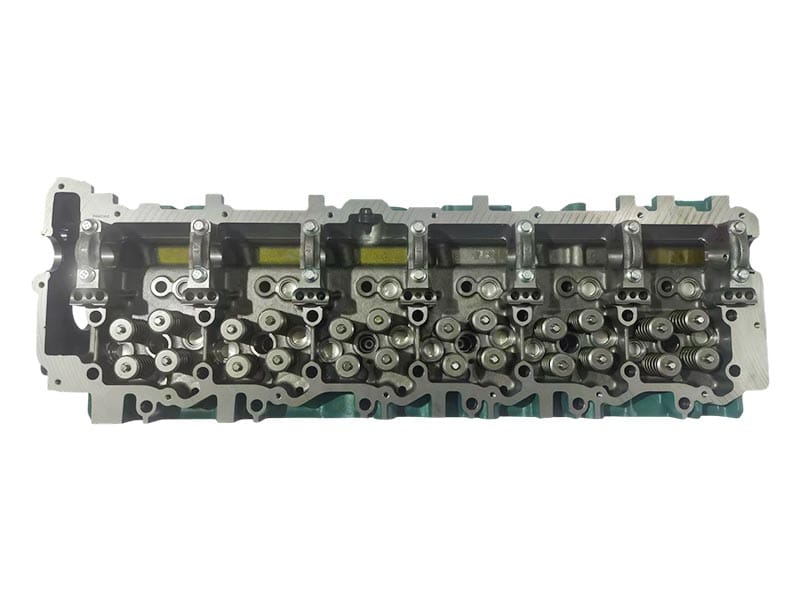
During a cylinder-head inspection, the workshop should pay close attention to regions exposed to high thermal and mechanical stress. Valve-seat areas, injector-related features, combustion-chamber bridges, coolant passages, and thin sections may deserve close examination depending on the head design.
Do not assume that every engine family cracks in the same location. The pattern depends on casting design, material, thermal loading, service history, and previous repairs. Use the engine-specific repair information whenever it is available.
When a suspected crack is found, photograph both a close-up and a wider view showing its location. This improves the repair record and helps a replacement supplier understand why the head is being replaced.
Check Head Flatness Without Treating Warpage as a Crack
Overheating can distort a cylinder head even when no crack is present. This distinction matters because warped sealing surfaces can produce many of the same cracked cylinder head symptoms associated with combustion or coolant leakage.
Flatness and surface condition should be checked using the method and limit specified for the engine. Do not use a generic warpage limit from another engine family. Also record any previous resurfacing, because remaining material and allowable machining may affect the repair decision.
A warped head may be repairable under an approved process, while a cracked head may require a different decision depending on crack location, material, severity, and repair specification. The two conditions should not be treated as synonyms.
Inspect the Head Gasket as Evidence, Not as the Final Answer
When the head is removed, preserve and photograph the head gasket before cleaning the mating surfaces. Burned areas, sealing-track changes, coolant paths, erosion, or unusual marks may help reconstruct the leakage path.
However, gasket damage can be primary or secondary. Severe overheating can distort the head and damage the gasket. A leaking gasket can also create hot-gas paths and local thermal stress. Therefore, the gasket should be considered part of the evidence surrounding cracked cylinder head symptoms, not an automatic explanation that ends the investigation.
Compare gasket evidence with head flatness, crack-testing results, block surface condition, and the original operating history.
A written record makes cracked cylinder head symptoms easier to compare against the later inspection findings after teardown.
Build a Confirmation Record Before Ordering a Replacement Head
When cracked cylinder head symptoms lead to teardown, organize the evidence before purchasing. This keeps the diagnosis separate from the replacement specification.
| Evidence | What to Record | Why It Matters |
|---|---|---|
| Engine identity | Complete engine code and identification plate | Supports correct replacement matching |
| Operating symptoms | Coolant loss, overheating, smoke, rough running, warning events | Preserves the pre-teardown history |
| Cooling-system findings | Leak checks, pressure behavior and contamination | Separates external and internal leakage clues |
| Cylinder evidence | Compression or other cylinder-level findings where applicable | Helps localize the problem |
| Head condition | Visible defects, flatness findings and surface condition | Documents physical condition |
| NDT or pressure test | Method, result and defect location | Supports crack confirmation |
| Old head identification | Part reference, casting marks and interface photos | Supports accurate replacement selection |
Even confirmed cracked cylinder head symptoms do not identify which replacement casting or assembled head should be purchased.
Do Not Order a Replacement Until the Head Is Identified
Confirming failure and identifying the replacement are different tasks. Even when the cracked cylinder head symptoms are backed by testing, the new head still has to match the exact engine version.
Record the old head’s reference, casting marks, mounting faces, ports, injector-related features, and required supplied components. The guide on cylinder head identification explains how to build this matching package from engine and physical evidence.
The current cylinder head product category contains several replacement-head listings. A listed family or reference can help narrow the search, but final compatibility should still be checked against the complete engine code and existing head.
Confirm Whether You Need a Bare or Fitted Cylinder Head
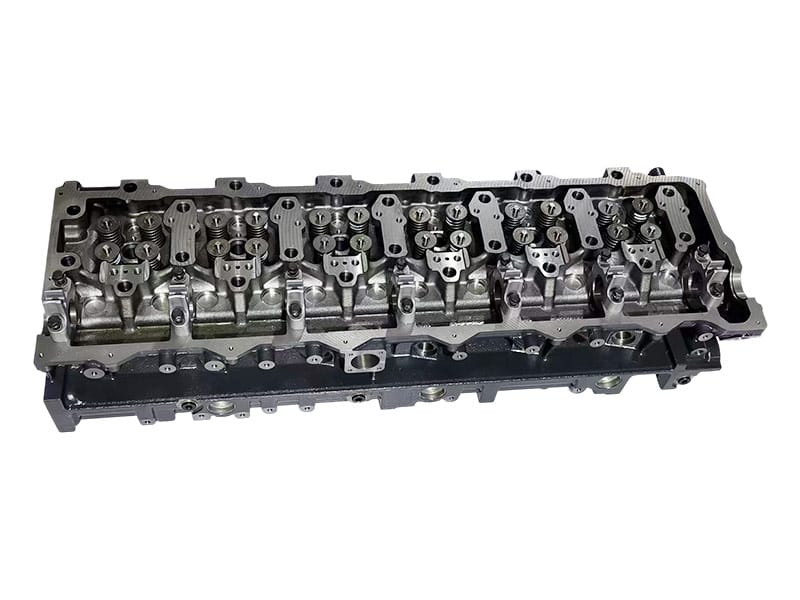
A diagnosed crack does not automatically define the supply configuration. Some repair projects need a bare head, while others require a head with selected fitted components.
Before ordering, decide which existing components can be reused and which should be replaced based on inspection. Valves, springs, guides, seats, camshaft-related components, plugs, seals, and gaskets should not be assumed to come with every replacement head.
The earlier article on bare vs complete cylinder head explains why buyers should use a written included-components list rather than treating a product photo as the packing list.
Correct the Original Cause Before Installing the Replacement
If the investigation shows that overheating or another system fault contributed to the head failure, correct that issue before the replacement engine is returned to service. The new head cannot protect itself from an unresolved cooling restriction, loss of coolant, lubrication problem, improper installation, or other damaging condition.
Review the cooling system, oil system, gasket surfaces, fasteners and tightening procedure, and related components according to the engine’s service documentation. Do not apply generic torque values or machining limits from unrelated engines.
This final step is important because cracked cylinder head symptoms describe what the failed engine showed. A successful repair must also address why those symptoms developed.
For purchasing teams, the evidence behind cracked cylinder head symptoms should stay with the repair record while fitment information is prepared separately.
What to Send When Requesting a Replacement Cylinder Head
If testing confirms that replacement is required, send the complete engine code, head reference, casting marks, multi-angle photographs, required supply configuration, and quantity. If the engine has been rebuilt before, mention that history.
For example, the site’s D2066 and D2076 cylinder head listing specifically advises buyers to compare the complete engine identification, existing-head reference, mounting faces, ports, and connections rather than assuming every version uses the same head.
You can submit the evidence through the contact page. Keep the failure-confirmation records separate from the fitment package so the supplier can match the replacement without being asked to infer the root cause from symptoms alone.
Conclusion
Cracked cylinder head symptoms are warning signs, not a final diagnosis. Coolant loss, white exhaust, repeated overheating, cooling-system pressure, fluid contamination, and compression problems can all justify further investigation, but several other faults can create the same symptoms.
The stronger repair process is to document the operating history, test the cooling and combustion systems appropriately, inspect the removed head, use suitable crack-detection methods when necessary, and evaluate flatness and gasket evidence separately. Once the crack is actually confirmed, identify the exact replacement head and correct the condition that contributed to the failure before the engine returns to service.
FAQ
What are the most common cracked cylinder head symptoms?
Common cracked cylinder head symptoms can include unexplained coolant loss, persistent white exhaust vapor, repeated overheating, pressure or bubbling in the cooling system, oil and coolant contamination, rough running, and compression loss. None of these signs alone proves the head is cracked.
Can a cracked cylinder head be confused with a blown head gasket?
Yes. The two faults can produce very similar symptoms because both can allow combustion pressure, coolant, or oil to cross sealing boundaries. Confirmation may require cooling-system testing, cylinder-level testing, inspection after teardown, and direct examination of the head.
Does overheating always mean the cylinder head is cracked?
No. Overheating can result from many cooling-system or engine problems. Severe or repeated overheating can contribute to cylinder-head distortion or cracking, but the head should be inspected and tested before a crack is diagnosed.
How is a cracked cylinder head confirmed after removal?
Confirmation can involve visual inspection, pressure testing, and an appropriate non-destructive testing method such as liquid penetrant testing for suitable materials and surface-breaking defects. The method and acceptance criteria should match the head material and repair specification.
What information is needed when ordering a replacement cylinder head?
Send the complete engine code, old head reference, casting marks, clear photographs of all major interfaces, required supply configuration, and quantity. If cracked cylinder head symptoms have already been investigated, keep those diagnostic records available but treat fitment confirmation as a separate purchasing step.