Accurate cylinder head identification should happen before a replacement head is ordered, not after the new part arrives. For heavy truck engine repairs, a cylinder head may look correct from a distance while still differing in casting details, mounting faces, port layout, injector arrangement, sensor locations, valve-train configuration, or supplied components. A model name alone is often not enough to confirm that two heads are interchangeable.
The most reliable approach is to build a small identification package from the engine and the removed head. That package should combine the complete engine code, readable part or casting references, several carefully chosen photographs, key interface details, and a clear statement of whether a bare or assembled head is required. This guide explains how to organize cylinder head identification so repair workshops and parts buyers can reduce avoidable matching errors before requesting a quotation.
Why Cylinder Head Identification Must Come Before Price or Availability
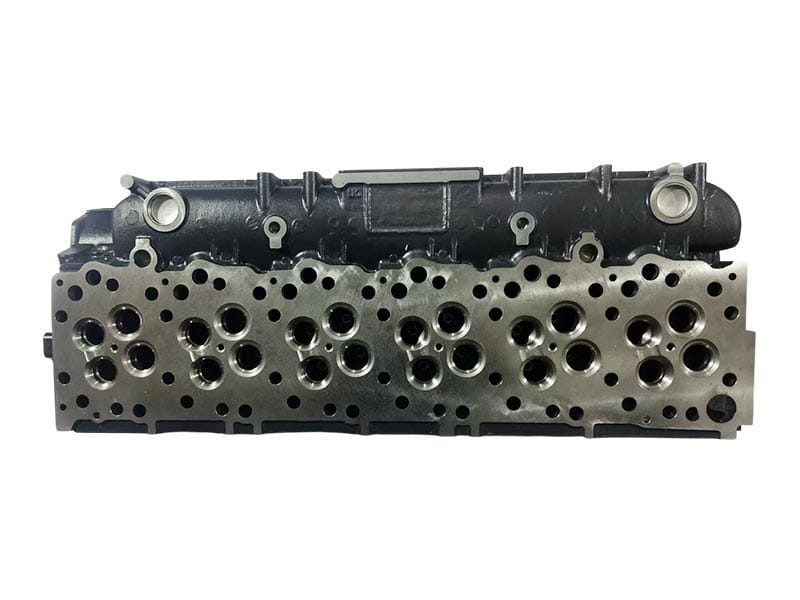
When a truck is waiting for repair, purchasing teams naturally want a fast answer. However, asking “Do you have this cylinder head?” before establishing the exact identity can create the wrong type of speed. A quotation may be returned quickly, but if it is based on an incomplete engine description or a visually similar head, additional clarification will be required later.
Cylinder head identification should therefore be the first purchasing step. It creates a technical basis for every later question: availability, supply configuration, inspection documents, packaging, and delivery. If the identity is uncertain, all of those downstream details remain uncertain as well.
A useful starting point is the website’s engine cylinder head category, which groups available replacement-head listings. The category can help a buyer find a likely product family, but the listed family name should still be checked against the actual engine and old head before an order is approved.
Start Cylinder Head Identification With the Engine, Not the Head Alone
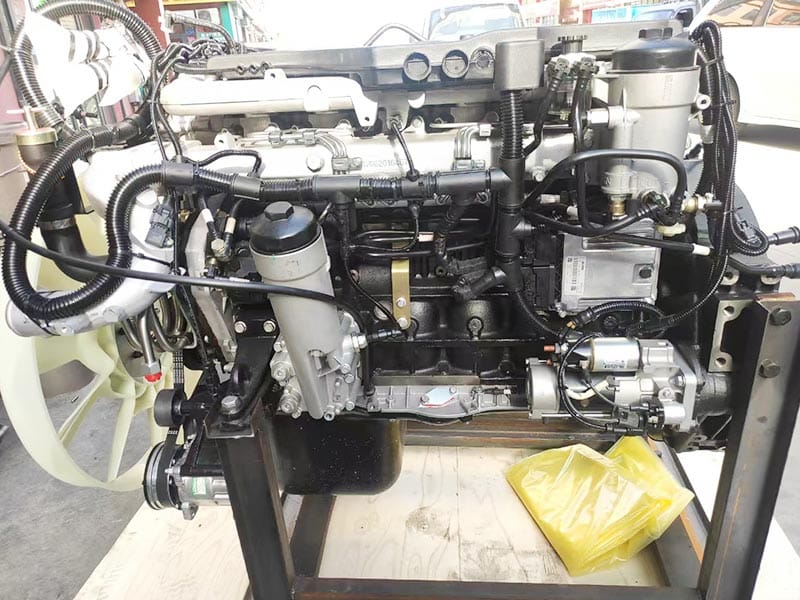
A removed cylinder head contains important clues, but cylinder head identification becomes more reliable when those clues are connected to the engine from which the head came. Record the complete engine model or code exactly as it appears on the identification plate or other reliable documentation. Do not shorten the code or replace it with a general engine-family description.
If the engine plate is readable, photograph the complete plate and keep the original image. A cropped image may be convenient for messaging, but the full photograph preserves nearby information that may later become important. Vehicle identification information can also support application research when it is available, although it should not replace direct confirmation of the engine and head. The official VIN decoder explains how a vehicle identification number is structured and can be used as one source of vehicle-level information.
For cylinder head identification, engine context is especially valuable when a family has several versions. Two engines with similar family names may use different head configurations, and a replacement decision should never rely only on the broad family designation.
Record Every Number and Marking Before Cleaning or Machining
Once the head is removed, photograph every visible number before aggressive cleaning, blasting, machining, or other work that might make a marking harder to interpret. Useful evidence may include a stamped part reference, cast number, foundry mark, production mark, date code, or workshop-added identification.
Not every number has the same meaning. A casting number may identify a casting family while a part reference may identify a finished configuration. A foundry mark can indicate manufacturing origin without defining the final application. A workshop marking may have no original production meaning at all. Good cylinder head identification records the marking first and interprets it second.
If a number is partly damaged, do not fill in the missing digits from memory. Take a close photograph from more than one angle and note which characters are certain. A supplier can then treat the marking as evidence rather than as a guaranteed part number.
Why one number should not be treated as universal proof
Even a clear reference should be compared with the complete engine code and the physical interfaces of the old head. A number can be entered incorrectly in an old workshop record, and an engine may have been repaired previously with a replacement component. Cylinder head identification is strongest when independent clues agree with each other.
Know the Difference Between a Part Number and a Casting Number
One of the most common cylinder head identification mistakes is assuming that every raised or stamped number is an orderable part number. In manufacturing, a casting can pass through machining and assembly steps before becoming a finished cylinder head. The number formed into the casting may therefore identify the raw or semi-finished casting rather than every final variant made from it.
A purchasing team should capture both kinds of information when possible. If the old head has a stamped or engraved reference as well as a cast-in number, record both separately. Label photographs so the supplier can see where each number is located.
The same principle applies to website product references. For example, the D0834 cylinder head listing provides a listed reference and specifically advises buyers to compare that reference with the complete engine code and photographs of the existing head. The listed number is useful for cylinder head identification, but it should not be treated as proof of universal fitment across every possible engine version.
Use a Standard Photo Set for Cylinder Head Identification
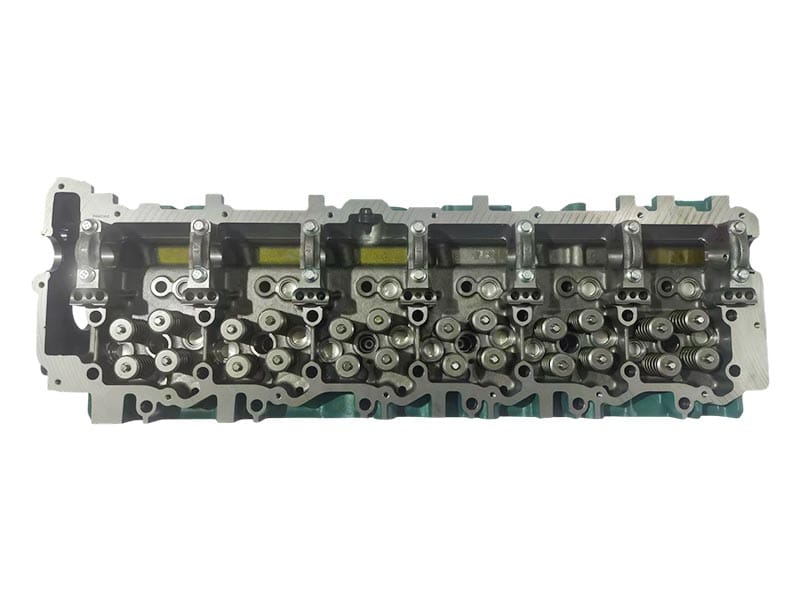
Photographs are among the fastest ways to improve cylinder head identification, but a single top-view photo is rarely enough. Build a repeatable photo set so the supplier can compare the important interfaces rather than guessing from general appearance.
| Photo | What It Should Show | Why It Helps |
|---|---|---|
| Full top view | Complete upper side of the head | Shows overall configuration and valve-train area |
| Combustion face | Complete gasket mating face | Shows chamber, valve and passage arrangement |
| Intake side | Ports, mounting holes and visible markings | Helps compare port layout and attachments |
| Exhaust side | Ports, studs or bolt positions and connections | Helps identify interface differences |
| Front and rear ends | End faces, drive areas, plugs and mounting details | Reveals differences hidden in side views |
| Reference close-ups | Every readable cast, stamped or engraved number | Preserves identification evidence |
| Engine plate | Complete identification plate | Connects the head to the engine application |
Keep the images in their original resolution when possible. Messaging applications can compress files, making small stamped characters difficult to read. If a close-up is needed, send both the close-up and a wider image showing where the marking is located.
Compare the Combustion Face and Gasket Mating Pattern
The combustion face contains some of the most useful physical evidence for cylinder head identification. Photograph the entire face square to the camera so the chamber arrangement, valve positions, coolant and oil passages, bolt holes, and other machined features can be compared.
Do not use a head gasket alone as a substitute for head identification. A gasket can help show passage and bolt patterns, but it does not reveal every upper-side feature or supplied component. The old head, engine information, and gasket pattern should support one another.
If the head has already been resurfaced or repaired, note that history. Machining can change visible surface condition and can sometimes remove marks near a machined area. Cylinder head identification should separate evidence about identity from evidence about serviceability.
Check Intake, Exhaust and Fluid Connection Layouts
Two heads can have a similar combustion face while differing at the sides. For that reason, cylinder head identification should include intake ports, exhaust ports, coolant connections, oil passages, threaded bosses, plugs, sensor locations, and other external interfaces.
Photograph each side from directly in front of the mounting face, then add angled views to show depth and connection positions. If a connection is hidden by a remaining component, photograph the assembly first and then again after removal when practical.
The D2066 and D2076 cylinder head listing similarly advises buyers to compare casting marks, the part reference, mounting faces, ports, and connections before ordering. This is a useful model for cylinder head identification: no single clue is expected to carry the entire fitment decision.
Identify Injector, Valve and Valve Train Features
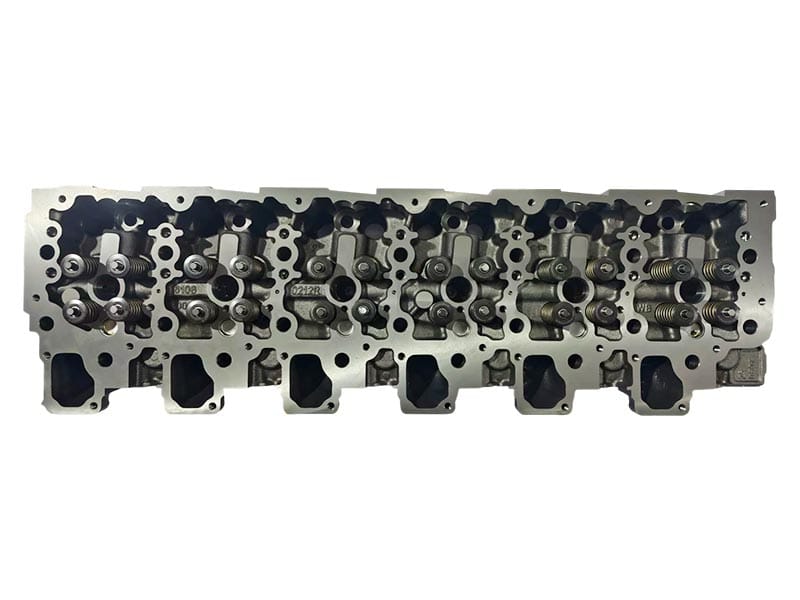
The upper side of the head can contain major configuration differences. Depending on the engine design, cylinder head identification may require the buyer to document injector-related features, valve arrangement, valve springs, rocker or camshaft-related interfaces, and other valve-train components.
The goal is not to disassemble every head solely for an inquiry. Instead, photograph the configuration that is already visible and clearly state which components remain installed. If a workshop removes parts during inspection, keep a record of where they came from.
This is also the point where buyers should distinguish identity from supply scope. A replacement head may be offered as a bare casting, a machined bare head, or a head with fitted components. Those configurations are not automatically equivalent. The earlier guide on bare vs complete cylinder head explains why the component list should be confirmed in writing instead of inferred from a product photograph.
Do Not Confuse Cylinder Head Identification With Condition Inspection
Cylinder head identification answers “What head is this?” A condition inspection answers “Can this head be reused or repaired?” Those are different questions and should be documented separately.
Cracks, corrosion, warpage, seat wear, guide wear, damaged threads, surface damage, and previous repairs can affect whether an old head is serviceable, but they do not automatically change its identity. Likewise, a head can be correctly identified and still be unsuitable for reuse.
Keeping the two tasks separate improves purchasing decisions. The workshop can report that the existing head has been identified with reasonable confidence while also stating that repairability is pending inspection. That allows a replacement inquiry to move forward without turning an identification claim into a condition claim.
Use Measurements Only When They Help Resolve a Real Difference
Measurements can support cylinder head identification, but they should be targeted. Overall length, width, and height may help distinguish very different heads, yet they usually cannot prove exact fitment. More useful measurements are those tied to a known variation, such as a specific port spacing, mounting-hole distance, bore-related feature, or interface dimension.
Record where and how the dimension was measured. If a supplier requests a specific measurement, ask for a marked photo or drawing showing the exact points. This prevents two people from measuring different features under the same name.
When measurements become part of a fitment decision, instrument suitability matters. The dimensional measurement guidance from the National Institute of Standards and Technology explains the role of accurate, traceable dimensional measurement in manufacturing. A workshop inquiry does not require laboratory metrology, but cylinder head identification should not rely on a rough measurement presented as exact.
Build a Minimum Identification Pack Before Requesting a Quote
A practical cylinder head identification pack does not need dozens of documents. It needs the right evidence. For most replacement inquiries, the following structure is enough to start a serious technical review.
| Identification Field | What to Send | Status to Mark |
|---|---|---|
| Engine identity | Complete engine code and plate photo | Confirmed / Partly readable / Unknown |
| Head reference | Stamped, engraved or documented reference | Confirmed / Possible reference |
| Casting marks | Clear close-up plus location photo | Recorded / Not visible |
| Combustion face | Square full-face photograph | Attached / Not available |
| Side interfaces | Intake, exhaust, front and rear views | Attached / Partly obstructed |
| Required configuration | Bare or fitted components required | Defined / Needs supplier options |
| Quantity | Exact pieces required | Confirmed |
This table also makes uncertainty visible. If the engine plate is damaged or the reference is partly unreadable, say so. A transparent cylinder head identification pack is more useful than a confident-looking request built on guessed information.
When the Old Cylinder Head Is Missing
Sometimes cylinder head identification must be performed without the original head. The old component may have been discarded, exchanged, or sent to a machine shop before purchasing begins. The process becomes harder, but it does not need to become guesswork.
Start with the complete engine identification and vehicle or equipment information. Search the workshop’s previous invoices, maintenance records, old photographs, teardown notes, and parts history. If another identical engine is available in the same fleet, its information can be useful as a comparison, but do not assume two vehicles are identical simply because they have the same broad model description.
If the supplier proposes a replacement based on catalog data, ask for the proposed reference and the evidence used to match it. Before ordering, compare the available application information with the proposed configuration and identify any open points that still require technical confirmation.
When the Engine Has Been Rebuilt Before
Previous repairs add another layer to cylinder head identification. An engine may no longer contain the same component configuration it had when originally built. A head could have been replaced, machined, assembled with different valve-train components, or adapted during an earlier repair.
For this reason, historical vehicle data and the physical old head should be compared rather than treated as competing sources. If the catalog suggests one reference but the existing component carries another, stop and investigate the difference. Do not automatically assume either source is wrong.
A good inquiry should state that the engine has a known rebuild history when applicable. This alerts the supplier that the present configuration may require more physical evidence than a standard catalog lookup.
Confirm the Supply Configuration After the Head Is Identified
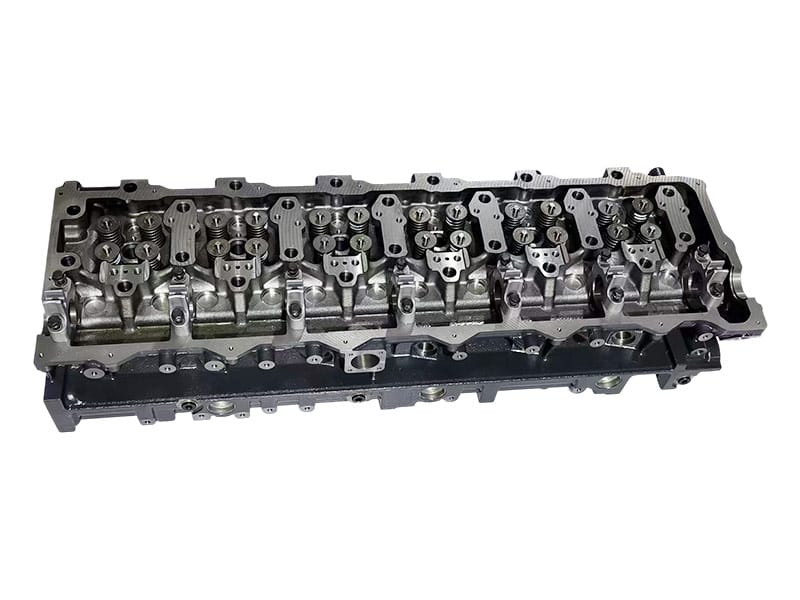
Successful cylinder head identification does not finish the purchasing task. Once the replacement reference has been reviewed, confirm exactly what will be supplied.
Ask whether the quotation is for a bare casting, a machined head, or a head with fitted components. Where applicable, clarify valves, springs, guides, seats, plugs, camshaft-related parts, seals, gaskets, and other items that may appear in a photograph but are not necessarily included.
Also ask the supplier to identify any component that must be transferred from the old head. The written quotation or supply list should be the controlling document, not the appearance of a website image.
How to Review a Proposed Replacement Before Approval
When the supplier returns a proposed replacement, compare it against the same evidence used for cylinder head identification. The review should be systematic rather than visual only.
Check the proposed reference against the old reference and engine code. Compare the combustion-face pattern, mounting points, side ports, front and rear interfaces, injector-related features, and visible valve-train arrangement. Review any requested dimensions and confirm that both parties measured the same features.
If a difference is found, document it instead of assuming it is insignificant. Some differences may be legitimate revisions or supersessions, while others may indicate a different application. The buyer should understand why the difference exists before releasing the order.
Common Cylinder Head Identification Errors to Avoid
The first mistake is ordering from the engine family name alone. The second is treating a casting number as though it were always the finished part number. The third is sending one photograph and expecting the supplier to infer all hidden interfaces.
Another common error is using dimensions copied from an online listing instead of measurements or records from the actual repair. Buyers also create confusion when they send photographs from several different heads without labeling which engine each image belongs to.
Finally, do not combine cylinder head identification with a promise of compatibility before the evidence has been reviewed. Use language such as “candidate reference,” “matching review,” or “fitment to be confirmed” until the technical comparison is complete.
What to Send With a Cylinder Head Inquiry
For a replacement inquiry, send a compact but complete cylinder head identification package: the full engine code, engine plate photograph, old head reference, casting marks, full-face photographs, intake and exhaust side views, front and rear views, required configuration, and exact quantity.
If there is a specific feature that caused uncertainty, photograph it closely and explain why it matters. If the old head is missing, state that clearly and provide the best available engine and service-history evidence instead.
Once the information is ready, use the contact page to send the engine code, head reference, photographs, required components, and quantity for a matching review. A complete identification package can reduce unnecessary back-and-forth and makes it easier to separate confirmed facts from points that still require verification.
Conclusion
Reliable cylinder head identification is a process of matching several independent clues, not finding one convenient number. Start with the complete engine identity, then document every head reference and casting mark, photograph the combustion face and all major interfaces, record relevant measurements only when needed, and state the required supply configuration.
This approach is especially important when an engine family has multiple versions or when the engine has been rebuilt previously. It gives the workshop, buyer, and supplier a shared evidence set that can be reviewed before the replacement is ordered. The result is a better purchasing decision: the proposed head is selected from documented fitment evidence rather than visual similarity or an incomplete model name.
FAQ
What is the most important information for cylinder head identification?
The strongest starting combination is the complete engine code, a clear engine-plate photo, the old head’s readable references or casting marks, and multi-angle photographs of the head. Cylinder head identification becomes more reliable when several independent details agree.
Can a casting number identify the exact replacement cylinder head?
A casting number is useful evidence, but it may identify a casting family rather than every finished configuration. Compare it with the engine code, any stamped or engraved part reference, mounting faces, ports, and other physical features before approving a replacement.
Is the engine model alone enough to order a cylinder head?
It should not be treated as sufficient evidence when several engine variants or head configurations may exist. Use the complete engine code and physical information from the old head whenever possible.
What photos should I take for cylinder head identification?
Take a full top view, combustion-face view, intake side, exhaust side, front, rear, close-ups of all readable markings, and a photograph of the engine identification plate. Keep the original-resolution files so small numbers remain legible.
What should I do if the old cylinder head has no readable part number?
Do not guess a reference. Build the cylinder head identification request from the complete engine code, plate information, casting marks, multi-angle photos, relevant interface measurements, and repair history. Ask the supplier to explain the basis for the proposed replacement reference.